
What If My Truck Had A Maintenance Issue Before The Crash?

When a truck accident occurs due to a maintenance issue, it introduces a complex layer to the claim. Unlike a simple negligence case where driver error is the primary factor, a mechanical failure points to potential liability on the part of the trucking company, the maintenance provider, or even the manufacturer of the faulty part. Establishing this liability requires a thorough investigation, often involving expert witness testimony and detailed review of maintenance logs.
The Federal Motor Carrier Safety Administration (FMCSA) has strict regulations regarding commercial vehicle maintenance. These regulations aren’t merely suggestions; they are legally binding standards designed to ensure the safe operation of these large vehicles. A trucking company’s failure to adhere to these standards can be a critical piece of evidence in proving negligence. This includes everything from pre-trip inspections to scheduled maintenance and repair records.
As a personal injury attorney with over 13 years of experience practicing in San Diego, I’ve seen firsthand how insurance companies attempt to downplay the significance of maintenance issues. They’ll often argue the failure was unforeseeable or that the driver was still at fault. However, having been trained by former insurance defense attorneys, I understand their tactics and know how to build a strong case that exposes their attempts to minimize their responsibility. I’ve spent my career helping victims of truck accidents navigate these challenges and secure the compensation they deserve.
Can I sue the trucking company if the truck wasn’t properly maintained?
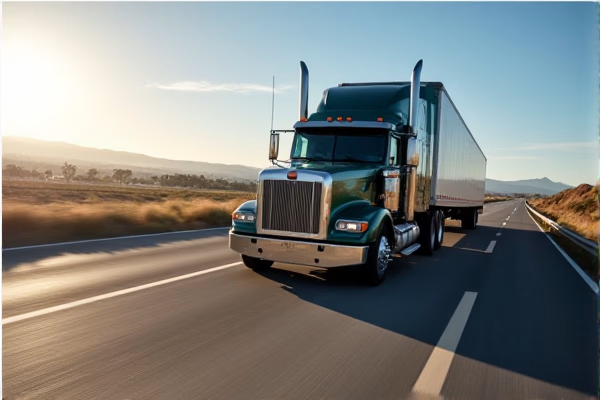
Absolutely. Trucking companies have a legal duty to ensure their vehicles are safe for operation. This includes a rigorous maintenance schedule and prompt repairs of any identified issues. If a company knowingly operates a truck with known mechanical defects, they can be held liable for any resulting accidents and injuries. This liability stems from the doctrine of **vicarious liability** (respondeat superior), holding the trucking company legally responsible for the wrongful acts of its drivers committed within the scope of their employment. Civ. Code § 2338.
To successfully pursue a claim, we need to demonstrate a direct link between the maintenance issue and the accident. This often involves obtaining maintenance records, inspection reports, and potentially hiring a qualified mechanic to inspect the truck and provide expert testimony. It’s crucial to act quickly, as trucking companies often attempt to repair or dispose of the vehicle before a thorough investigation can be conducted.
What kind of evidence is needed to prove a maintenance issue?
Gathering sufficient evidence is paramount in these cases. Key pieces of evidence include:
- Maintenance Logs: These records detail all repairs, inspections, and preventative maintenance performed on the truck.
- Inspection Reports: Pre-trip and post-trip inspection reports can reveal any identified defects.
- Repair Bills: Documentation of any repairs made to the truck, including dates, descriptions of the work performed, and costs.
- Driver Logs: These logs can indicate if the driver reported any mechanical issues prior to the accident.
- Witness Statements: Testimony from anyone who observed the truck’s condition before the crash.
Additionally, we may need to subpoena records from the truck manufacturer or the maintenance provider to determine if there were any known defects or recalls related to the specific components involved in the accident. The more comprehensive the evidence, the stronger the case will be.
What if the truck company claims they were unaware of the maintenance issue?
Even if the trucking company claims they were unaware of the issue, they can still be held liable if they failed to implement a reasonable maintenance program. A responsible trucking company should have a system in place to regularly inspect and maintain their vehicles, regardless of whether drivers report specific problems. Negligence can be established through a lack of proper procedures or inadequate oversight. This is critical in cases where the driver has a history of FMCSA violations or lacked the proper CDL endorsements. CACI No. 426.
We can demonstrate this negligence by showing a pattern of inadequate maintenance, insufficient training, or a disregard for safety regulations. It’s important to remember that the burden of proof lies with the trucking company to demonstrate they exercised reasonable care in maintaining their vehicles.
How long do I have to file a claim after a truck accident involving a maintenance issue?
In California, the **Statute of Limitations** for personal injury claims is generally **two years** from the date of the accident. However, because trucking companies often begin evidence destruction (like purging ELD data) as soon as the law allows, immediate filing is critical to preserve the integrity of the claim. CCP § 335.1. Waiting too long can result in the loss of your right to recover compensation.
It’s essential to consult with an attorney as soon as possible to discuss your options and ensure all necessary steps are taken to protect your legal rights. Don’t delay – the sooner you act, the stronger your case will be.
What if the accident involved a government-owned truck or a road hazard?
If the truck accident involved a government-owned vehicle or a dangerous road condition maintained by a public entity, a formal administrative claim **MUST** be presented within **6 months** (180 days). Failure to meet this strict deadline under the Government Tort Claims Act can result in the permanent loss of your right to recover. Gov. Code § 911.2. This is a separate process from a standard personal injury claim and requires specific documentation and procedures.
Navigating these government claims can be complex, so it’s crucial to seek legal guidance from an attorney experienced in handling cases against public entities. We can ensure the claim is properly filed and all necessary evidence is submitted within the required timeframe.