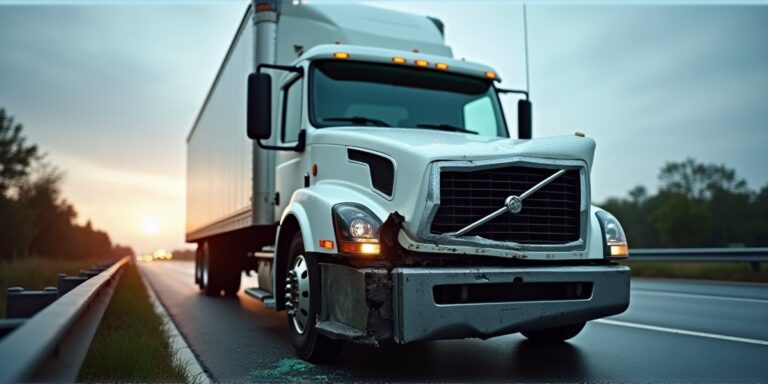

Who Is Liable If A Ups Truck Hits My Car In San Diego?

Determining liability in a UPS truck accident in San Diego is rarely straightforward. While UPS employs drivers, the company isn’t automatically responsible for every incident. Several factors come into play, including the driver’s actions, the company’s hiring and training practices, and the condition of the truck itself. It’s a complex situation that often requires a thorough investigation to uncover all responsible parties.
One of the first things we look at is whether the driver was negligent. This could include speeding – in California, commercial trucks are strictly prohibited from exceeding 55 miles per hour on any highway – distracted driving, or violating traffic laws. However, driver negligence isn’t the only potential source of liability. UPS, as the employer, also has a duty to ensure its drivers are properly trained and qualified.
I’ve been practicing personal injury law in San Diego for over 13 years, and I was trained by a former insurance defense attorney. This unique background gives me intimate knowledge of how insurance companies evaluate, devalue, and deny claims. I understand the tactics they use, and I’m prepared to fight for your rights.
What if the UPS driver was on their delivery route at the time of the accident?
If the driver was actively engaged in their duties for UPS – making deliveries, picking up packages – it significantly strengthens the case for holding UPS liable under the legal principle of **vicarious liability** (respondeat superior). This means the company is legally responsible for the wrongful acts of its employees committed within the scope of their employment. We’ll need to establish that the accident occurred while the driver was performing work-related tasks.
However, proving this isn’t always simple. Insurance companies will often try to argue the driver was off-duty or engaged in a personal errand. Detailed documentation, witness statements, and the driver’s logbook (if available) are crucial in establishing the driver’s work status at the time of the crash.
Can I sue UPS directly, or do I have to go through their insurance company?
Generally, you’ll be filing a claim against UPS’s insurance company. However, a lawsuit may ultimately be necessary if the insurance company denies your claim or offers an inadequate settlement. It’s important to understand that insurance companies are businesses, and their goal is to minimize payouts. They will often employ tactics to delay, devalue, or even deny legitimate claims.
We’ll handle all negotiations with the insurance company on your behalf, building a strong case based on evidence and legal precedent. If a fair settlement cannot be reached, we’re fully prepared to take your case to court to protect your rights and maximize your recovery.
What evidence is important to gather after an accident with a UPS truck?
Gathering evidence is paramount after any accident, but it’s especially critical in cases involving commercial vehicles. This includes: strongPolice reports: Obtain a copy of the official police report documenting the accident details.strongPhotos and videos: Take pictures of the damage to all vehicles involved, the accident scene, and any visible injuries.strongWitness information: Collect contact information from any witnesses who saw the accident.strongMedical records: Keep detailed records of all medical treatment, expenses, and lost wages.strongELD data: If possible, obtain the truck’s Electronic Logging Device (ELD) data, which can reveal information about the driver’s hours of service and potential fatigue. Federal Hours of Service (HOS)** regulations dictate exactly how long a driver can be behind the wheel. Violations of these federal safety standards, often proven through Electronic Logging Device (ELD) data, are used to demonstrate driver fatigue.
Preserving this evidence is crucial, as insurance companies may attempt to minimize their liability by disputing the facts of the accident. We can assist you in gathering and preserving all necessary evidence to build a strong case.
What if the UPS driver claims I was partially at fault for the accident?
It’s common for insurance companies to allege comparative negligence, arguing that you shared some responsibility for the accident. California’s ‘pure’ comparative fault system applies to trucking claims. Even if a truck driver argues you shared responsibility, you can still recover damages; however, your total compensation will be reduced by your percentage of fault. For example, if you’re found to be 20% at fault, you can still recover 80% of your damages.
We’ll thoroughly investigate the accident to determine the extent of your fault, if any. We’ll gather evidence to refute any claims of negligence and protect your right to a fair recovery. This may involve analyzing police reports, witness statements, and accident reconstruction data.
What should I do if a UPS truck driver was operating under the influence?
If there’s any suspicion that the UPS driver was driving under the influence, it’s crucial to notify the police immediately. The legal BAC limit for commercial drivers in California is 0.04 percent. This stricter standard reflects the higher duty of care required of those operating heavy machinery on San Diego roads. A DUI conviction can significantly strengthen your case and increase your potential recovery.
We’ll work with law enforcement to obtain any relevant evidence, including blood alcohol content (BAC) test results and police reports. We’ll also investigate whether UPS had any knowledge of the driver’s alcohol or drug use and failed to take appropriate action.
How long do I have to file a claim after a UPS truck accident in San Diego?
California law provides a two-year window from the date of the truck accident to file a lawsuit. Because trucking companies often begin evidence destruction (like purging ELD data) as soon as the law allows, immediate filing is critical to preserve the integrity of the claim.
Don’t delay in seeking legal counsel. The sooner you contact an attorney, the sooner we can begin investigating your case and protecting your rights. We’ll handle all the legal complexities and ensure your claim is filed within the statutory deadline.
What if the UPS truck was improperly maintained, leading to the accident?
Commercial vehicles are subject to rigorous safety and inspection regulations. Failure to maintain brakes, tires, or lighting systems according to California’s commercial vehicle safety framework can be used to establish direct liability against the carrier for ‘negligent maintenance’. We’ll investigate the truck’s maintenance records to determine if any safety violations contributed to the accident.
We can also subpoena maintenance logs and inspection reports to uncover any evidence of negligence. If the truck was improperly maintained, it can significantly strengthen your case and increase your potential recovery.
What if the accident involved a government-owned UPS vehicle or a dangerous road condition?
If a truck accident involves a government-owned vehicle or a dangerous road condition maintained by a public entity, a formal administrative claim MUST be presented within 6 months (180 days). Failure to meet this strict deadline under the Government Tort Claims Act can result in the permanent loss of your right to recover.
We have extensive experience handling claims against government entities and will ensure all necessary paperwork is filed correctly and on time. Navigating these complex procedures requires specialized knowledge and attention to detail.
What if the UPS driver was misclassified as an independent contractor?
California’s ‘ABC test’ determines if a delivery driver (Amazon/FedEx) is an employee or contractor. Even if labeled a ‘contractor,’ a company may be liable if they exercise control over the driver’s work, a key factor in San Diego delivery truck litigation.
We’ll investigate the driver’s employment status to determine if they were properly classified as an independent contractor. If the driver was misclassified, it can significantly strengthen your case and increase your potential recovery.
What if the UPS driver had a history of FMCSA violations?
A trucking company is directly liable if it was negligent in hiring, supervising, or retaining an unfit driver. This is critical in cases where the driver has a history of FMCSA violations or lacked the proper CDL endorsements.
We’ll conduct a thorough background check on the driver to uncover any prior safety violations or disciplinary actions. This information can be used to demonstrate the company’s negligence and increase your potential recovery.