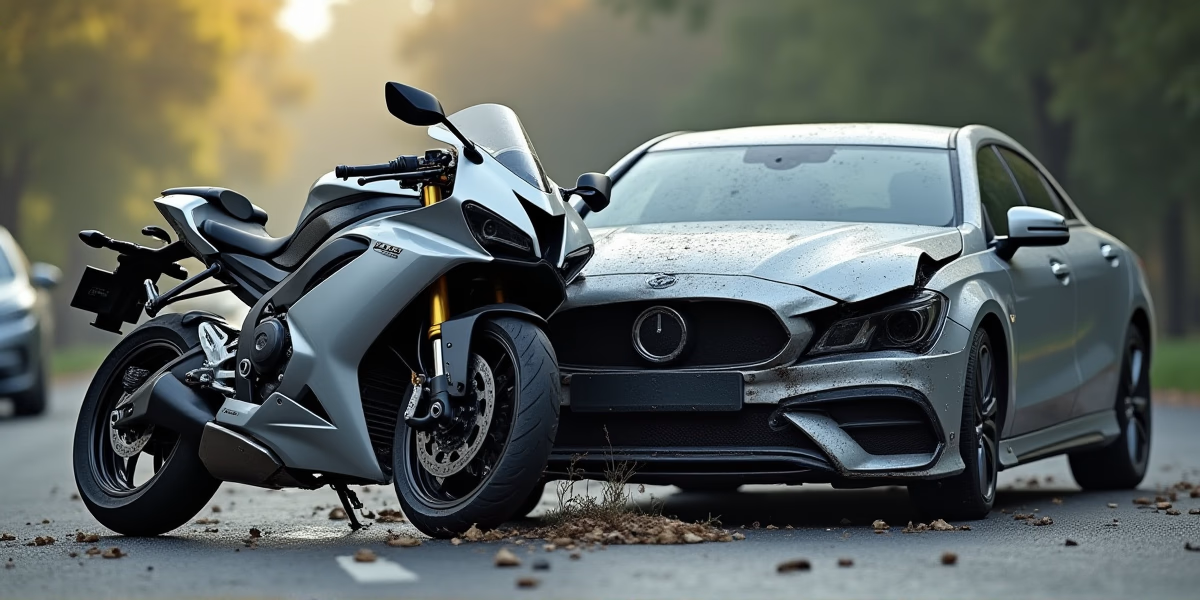
How Can A Lawyer Prove Fault In A Motorcycle Accident?

Proving fault in a motorcycle accident is often more complex than it appears. Unlike car accidents where there’s often a clear visual picture of what happened, motorcycle crashes frequently involve a lot of “he said, she said.” The insurance company’s job is to minimize their payout, and they’ll often look for any reason to shift blame onto the rider. That’s where an experienced attorney comes in. We understand the tactics they use, and we know how to build a strong case to demonstrate the other driver’s negligence.
The first step is a thorough investigation. This includes obtaining the police report, interviewing witnesses, and gathering any available evidence from the scene of the accident. We’ll also look at traffic camera footage, dashcam recordings, and even the “black box” data from the vehicles involved. Often, a critical piece of evidence is the vehicle’s Event Data Recorder (EDR), which captures speed, braking, and steering information in the moments leading up to the crash. This data can be invaluable in reconstructing the accident and proving the other driver’s fault.
I’ve spent my career representing injured motorcyclists in San Diego, and I’ve been trained by former insurance defense attorneys. This gives me intimate knowledge of how insurance companies evaluate, devalue, and deny claims. They’re looking for weaknesses in your case, and they’ll exploit them if they can. That’s why it’s so important to have an advocate on your side who understands their strategies and can protect your rights.
What types of evidence are most helpful in proving fault?
Several types of evidence can be crucial in establishing fault in a motorcycle accident. The police report is a good starting point, but it’s important to remember that it’s not always accurate or complete. Witness statements are also valuable, but they can be subjective and unreliable. The most compelling evidence often comes from objective sources, such as dashcam footage, traffic camera recordings, and vehicle data recorders. Photos and videos of the accident scene, including damage to the vehicles and any visible injuries, are also essential. Finally, expert testimony from accident reconstruction specialists can help to explain the complex dynamics of the crash and demonstrate how the other driver’s negligence caused your injuries.
We also look for evidence of the other driver’s prior driving record. A history of speeding tickets, reckless driving convictions, or DUI arrests can be strong indicators of their negligent tendencies. Similarly, evidence that the other driver was distracted at the time of the accident – such as cell phone records or social media posts – can be very helpful in proving fault.
How does California’s lane splitting law affect fault determination?
California is unique in that it legally recognizes lane splitting, allowing motorcyclists to ride between rows of stopped or moving traffic. However, this doesn’t mean that lane splitting automatically absolves the rider of responsibility. In fact, proving that the lane splitting maneuver was performed “in a safe and prudent manner” is essential to rebutting claims of rider negligence. Factors considered include the speed differential between the motorcycle and surrounding traffic, the visibility conditions, and the overall flow of traffic. CVC § 21658.1 defines the parameters of legal lane splitting, and we use this statute to build a strong defense against claims of rider fault.
What if the other driver claims I was speeding?
Insurance companies often allege that the motorcyclist was speeding to reduce their liability. It’s important to remember that speed is not always the sole determining factor in an accident. Even if you were exceeding the speed limit, the other driver may still be at fault if they were negligent in some other way, such as failing to yield the right-of-way or driving under the influence. We’ll carefully examine all available evidence to determine the actual speed of both vehicles at the time of the accident, and we’ll challenge any unsupported claims of speeding. We also consider the posted speed limit, road conditions, and visibility factors.
Can I still recover damages if I was partially at fault for the accident?
Yes, California operates under a “pure” comparative fault system. This means that you can still recover damages even if you were partially responsible for the accident. However, your total compensation will be reduced by your percentage of fault. For example, if you were 30% at fault, you can still recover 70% of your damages. Civ. Code § 1714 outlines the principles of comparative negligence in California. It’s crucial to have an attorney who can accurately assess your degree of fault and protect your right to a fair recovery.
What should I do if the insurance company asks me to give a recorded statement?
I strongly advise against giving a recorded statement to the insurance company without first consulting with an attorney. Insurance adjusters are trained to ask leading questions and elicit information that can be used to devalue your claim. They’re not on your side, and their goal is to minimize their payout. A recorded statement can be used against you later in the claims process, so it’s best to let an attorney handle all communications with the insurance company. We will protect your rights and ensure that you don’t inadvertently say something that could harm your case.