Is Lane Splitting Legal In San Diego?

Lane splitting is a complex issue in California, and unfortunately, many drivers—and even some insurance adjusters—misunderstand the law. While legal, it’s not a free pass to weave through traffic recklessly. The key is whether the maneuver was performed “in a safe and prudent manner.” This is where things get tricky, and why having an attorney experienced in motorcycle accidents is crucial.
The insurance company will likely focus on factors like your speed relative to surrounding traffic, the density of traffic, and visibility conditions. They’ll attempt to portray lane splitting as inherently dangerous, regardless of your careful execution. They may also try to introduce evidence of any prior traffic violations to paint you as a negligent rider. However, California law specifically acknowledges lane splitting, and a skilled attorney can build a strong defense based on the legal definition and your specific circumstances.
I’ve been practicing personal injury law in San Diego for over 13 years, and I’ve seen firsthand how insurance companies evaluate these claims. I was trained by a former insurance defense attorney, giving me intimate knowledge of how they devalue and deny legitimate claims. I understand the tactics they use, and I’m adept at countering them to ensure my clients receive the full compensation they deserve.
What factors do insurance companies consider when determining fault in a lane-splitting accident?
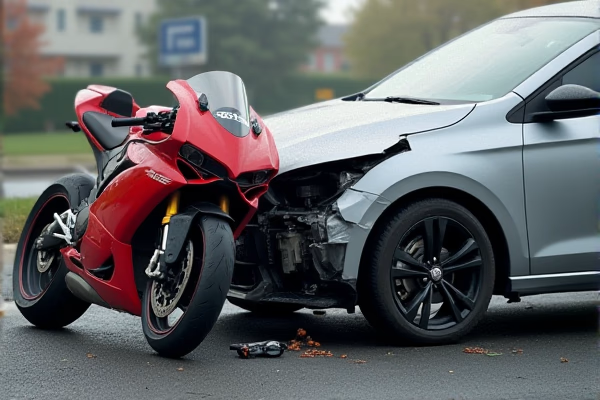
Insurance companies will meticulously examine several factors to assess fault in a lane-splitting accident. Speed Differential: They’ll analyze the difference between your speed and the surrounding traffic flow. A significant speed differential is often viewed negatively. Traffic Density: The heavier the traffic, the more scrutiny your lane-splitting maneuver will receive. Visibility Conditions: Poor visibility (rain, fog, darkness) increases the risk and can be used to argue negligence. Driver Behavior: They’ll look for any evidence of erratic lane changes or aggressive riding. Witness Statements: Independent witness accounts can be incredibly valuable, but insurance companies will often seek to discredit them if they favor the rider.
What evidence is most helpful in proving I was lane splitting safely?
Gathering compelling evidence is paramount. Dashcam Footage: If you have a dashcam, it’s your most powerful asset. It provides a clear, unbiased record of the accident. Witness Testimony: Obtain contact information from any witnesses and ask them to provide a written statement. Motorcycle Data: Modern motorcycles often record speed, braking, and acceleration data. This can corroborate your account of the events. Police Report: While not always definitive, the police report can contain valuable information. Expert Reconstruction: In complex cases, a motorcycle accident reconstruction expert can analyze the scene and provide a professional opinion on the cause of the accident.
What if the other driver claims they didn’t see me while I was lane splitting?
The other driver’s claim of not seeing you doesn’t automatically absolve them of responsibility. Drivers have a duty to be aware of their surroundings and maintain a proper lookout. Negligence Per Se: If the driver was speeding, distracted, or otherwise violating traffic laws, it strengthens your case. Duty of Care: Every driver has a duty to exercise reasonable care to avoid collisions. Lane Splitting Awareness: California drivers are expected to be aware of the possibility of lane splitting and adjust their driving accordingly. Comparative Fault: Even if you shared some responsibility, you may still be able to recover damages under California’s comparative fault system.
How does California’s comparative fault system apply to lane-splitting accidents?
California operates under a “pure” comparative fault system, meaning you can recover damages even if you were partially at fault. However, your recovery will be reduced by your percentage of fault. Percentage Allocation: The insurance company will attempt to assign a percentage of fault to both you and the other driver. Evidence Review: A thorough investigation and compelling evidence are crucial to minimize your assigned fault. Negotiation Strategy: An experienced attorney can negotiate with the insurance company to challenge their fault assessment. Litigation Option: If negotiations fail, litigation may be necessary to have a jury determine the appropriate allocation of fault. Remember, Civ. Code § 1714 governs this process.
What is the statute of limitations for filing a motorcycle accident claim in California?
California law provides a **two-year** window from the date of the motorcycle accident to file a lawsuit for personal injury. Because evidence at a crash scene—such as skid marks or GoPro footage—can disappear quickly, immediate filing is critical to preserve the integrity of the claim. Statute of Limitations: Failing to file within the two-year deadline will likely result in the permanent loss of your right to recover damages. Evidence Preservation: Prompt action allows you to gather evidence and secure witness testimony before it’s lost or compromised. Legal Consultation: Consulting with an attorney as soon as possible is essential to understand your rights and deadlines. CCP § 335.1 outlines these requirements.