
What If A Driver Merged Into My Lane Without Signaling?

Motorcycle accidents caused by improper lane changes are unfortunately common. California drivers have a legal duty to use their signals and check their blind spots before merging. When they fail to do so, and an accident occurs, they are liable for the resulting damages. This includes not only the cost of your medical treatment and repairs to your motorcycle, but also lost income, pain and suffering, and other related expenses.
The key to successfully pursuing a claim in these situations is establishing negligence. This means proving that the other driver breached their duty of care – in this case, by failing to signal or adequately check for other vehicles – and that this breach directly caused your injuries. Evidence like witness statements, police reports, and even dashcam footage can be invaluable in building a strong case.
As a personal injury attorney with over 13 years of experience practicing in San Diego, I’ve handled countless motorcycle accident cases. I was trained by a former insurance defense attorney, giving me intimate knowledge of how insurance companies evaluate, devalue, and deny claims. I understand the tactics they use and how to effectively counter them to ensure my clients receive the full compensation they deserve.
What evidence is most helpful in a lane change accident claim?
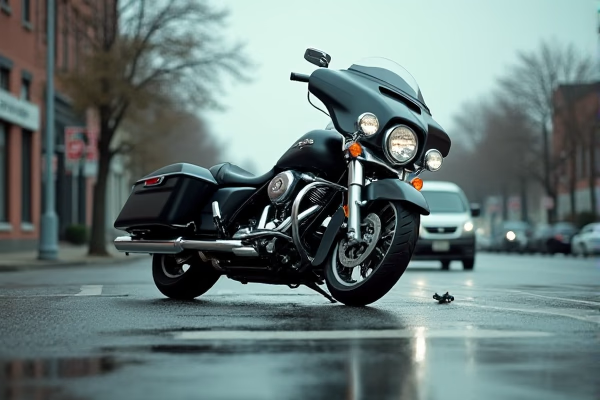
Gathering evidence is crucial. Police Reports: Obtain a copy of the official police report, as it often contains valuable information about the accident, including witness statements and the officer’s initial assessment of fault. Witness Statements: If there were any witnesses to the accident, their testimony can be incredibly helpful in corroborating your version of events. Dashcam Footage: If you or any nearby vehicles have dashcam footage, it can provide irrefutable evidence of the other driver’s negligence. Motorcycle Camera Footage: Many riders now use GoPro or other cameras, which can capture critical details of the accident. Medical Records: Document all of your injuries and treatment with detailed medical records.
How does California law address signaling requirements for lane changes?
California Vehicle Code § 21801 outlines the rules for lane changes. It requires drivers to signal their intention to change lanes and to do so only when it is safe. CVC § 21801 specifically states that a driver must exercise due care to avoid colliding with other vehicles. Failure to signal, or signaling too late, can be considered a violation of this code and strong evidence of negligence.
What if the other driver claims I was speeding or riding recklessly?
Insurance companies will often attempt to shift blame onto the motorcyclist, even in clear-cut cases of driver negligence. They may argue that you were speeding, riding recklessly, or otherwise contributing to the accident. It’s important to remain calm and avoid making any statements to the insurance adjuster without first consulting with an attorney. We can investigate the accident scene, gather evidence, and build a strong defense against these claims. Comparative Fault: California follows a ‘pure’ comparative fault system, meaning you can still recover damages even if you were partially at fault. However, your compensation will be reduced by your percentage of fault. Civ. Code § 1714
What are the common injuries sustained in lane change accidents?
Lane change accidents can result in a wide range of injuries, from minor scrapes and bruises to severe and life-altering trauma. Broken Bones: Fractures are common, especially in the legs, arms, and ribs. Concussions and Traumatic Brain Injuries (TBIs): Head injuries can have long-lasting cognitive and emotional effects. Spinal Cord Injuries: These can lead to paralysis or chronic pain. Road Rash and Lacerations: Motorcyclists are particularly vulnerable to road rash due to the lack of protective barriers. Internal Injuries: These can be difficult to diagnose and may require extensive medical treatment.
How long do I have to file a lawsuit after a motorcycle accident in California?
California law provides a **two-year** window from the date of the motorcycle accident to file a lawsuit for personal injury. CCP § 335.1 Because evidence at a crash scene—such as skid marks or GoPro footage—can disappear quickly, immediate filing is critical to preserve the integrity of the claim.
What should I do if the insurance company asks me to give a recorded statement?
Insurance companies often request recorded statements shortly after an accident. Politely Decline: You are not legally obligated to provide a statement. Potential Pitfalls: Statements can be used against you later in the claim process. Attorney Consultation: It’s best to consult with an attorney before speaking with the insurance adjuster. Focus on Facts: If you do choose to provide a statement, stick to the basic facts of the accident and avoid speculation or opinions. Document Everything: Keep a record of all communications with the insurance company.
What if I have medical liens that need to be resolved?
Medical liens are claims placed on your settlement by healthcare providers for unpaid medical bills. Lien Negotiation: We can negotiate with medical providers to reduce the amount of the lien. Medicare/Medicaid Liens: These liens have specific rules and regulations. ER vs. Medical Bills: It is important to understand the difference between emergency room bills and ongoing medical treatment costs. Subrogation Rights: Insurance companies may have subrogation rights to recover payments from your settlement. California Law: California law limits the amount a health insurance company or medical provider can claim from your settlement via a lien. Civ. Code § 3040
What if the accident involved a government vehicle or roadway hazard?
Accidents involving government entities have unique claim procedures. Administrative Claim: A formal administrative claim **MUST** be presented within **6 months** (180 days) of the accident. Government Tort Claims Act: Failure to meet this strict deadline under the Government Tort Claims Act can result in the permanent loss of your right to recover. Road Condition Documentation: Gather evidence of the dangerous road condition, such as potholes or poorly marked construction zones. Witnesses: Obtain statements from any witnesses who observed the road hazard. California Law: if a motorcycle accident involves a government-owned vehicle or a dangerous road condition like loose gravel, potholes, or poorly marked construction zones, a formal administrative claim **MUST** be presented within **6 months** (180 days). Gov. Code § 911.2
What if the at-fault driver’s insurance policy limits are too low?
If the at-fault driver’s insurance policy limits are insufficient to cover your damages, you may be able to pursue other avenues of recovery. Uninsured/Underinsured Motorist (UM/UIM) Coverage: Your own insurance policy may provide UM/UIM coverage. Policy Limits Tender: The insurance company will often make a policy limits tender, which is their maximum offer of settlement. Arbitration: UM/UIM claims may require arbitration. Excess Coverage: If the at-fault driver has excess insurance, you may be able to pursue a claim against that policy. California Law: California law requires insurers to offer Uninsured Motorist (UM) and Underinsured Motorist (UIM) coverage. Ins. Code § 11580.2
How can preserving evidence help my claim?
Evidence can disappear quickly after a motorcycle accident, making preservation critical. Spoliation Letter: We can send a spoliation letter to the at-fault driver and any relevant parties, requesting that they preserve all evidence related to the accident. Data Overwrite Windows: Electronic data, such as dashcam footage and ECM/EDR data, can be overwritten. Photographs: Take photographs of the accident scene, including vehicle damage, injuries, and road conditions. Witness Information: Obtain contact information from any witnesses. Documentation Timelines: Keep a detailed record of all medical treatment, lost wages, and other expenses.