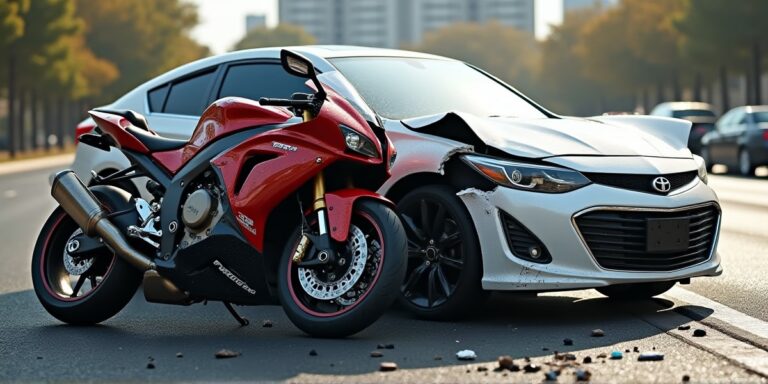

What If The At Fault Driver Has Minimum Coverage Only?

When an at-fault driver has minimum insurance coverage, it presents a significant challenge for motorcyclists seeking full compensation for their injuries. The state of California requires drivers to maintain a minimum level of liability insurance, but this amount often falls far short of covering the true costs associated with a serious motorcycle accident. This includes medical bills, lost income, property damage, pain and suffering, and other related expenses. It’s a frustrating reality, but it doesn’t necessarily mean you’re out of options.
One of the first steps I take in these situations is to thoroughly investigate all potential sources of recovery. This includes exploring the possibility of Uninsured Motorist (UM) coverage under your own auto insurance policy. Even if you don’t have collision coverage, you may still have UM coverage, which can provide compensation if you’re hit by an underinsured driver. It’s crucial to review your policy declarations page carefully to determine your UM limits.
I’ve been practicing personal injury law in San Diego for over 13 years, and I’ve seen firsthand how insurance companies attempt to devalue and deny legitimate claims. I was trained by a former insurance defense attorney, giving me intimate knowledge of how they evaluate cases and what tactics they employ. This experience allows me to anticipate their strategies and build a strong case on your behalf, even when dealing with limited insurance coverage.
What are my options if the at-fault driver is uninsured?

If the at-fault driver has no insurance at all, your options become more limited, but not nonexistent. As mentioned previously, Uninsured Motorist (UM) coverage is your primary recourse. This coverage is designed to protect you when you’re hit by an uninsured driver, and it can cover your medical bills, lost wages, and pain and suffering. However, your recovery is limited to the amount of your UM policy limits.
In some cases, you may be able to pursue a claim directly against the at-fault driver’s personal assets. This involves filing a lawsuit and obtaining a judgment against them. However, even if you win the lawsuit, collecting on the judgment can be difficult if the driver has limited assets. It’s important to weigh the costs and benefits of pursuing this option carefully.
Can I sue the at-fault driver personally if their insurance isn’t enough?
Yes, you can absolutely sue the at-fault driver personally if their insurance coverage is insufficient to cover your damages. This is often the only way to recover the full amount of your losses, especially in cases involving serious injuries. However, it’s important to understand that pursuing a personal lawsuit can be a complex and time-consuming process. You’ll need to prove the driver’s negligence and demonstrate the extent of your damages.
The process involves filing a complaint with the court, serving the driver with the lawsuit, and engaging in discovery to gather evidence. If the case doesn’t settle, it may proceed to trial. It’s crucial to have an experienced attorney on your side to guide you through this process and protect your rights.
What is Underinsured Motorist (UIM) coverage and how does it help?
Underinsured Motorist (UIM) coverage comes into play when the at-fault driver has insurance, but the policy limits are too low to cover your damages. This is a common scenario, as many drivers carry only the minimum required coverage. UIM coverage essentially steps in to fill the gap between the at-fault driver’s policy limits and your total damages.
To pursue a UIM claim, you’ll typically need to settle with the at-fault driver’s insurance company first. Once you’ve reached a settlement, you can then file a claim with your own insurance company under your UIM coverage. Your UIM coverage will then cover the remaining amount of your damages, up to your policy limits. It’s important to note that UIM claims can be complex, and insurance companies often attempt to deny or undervalue these claims.
What if the accident was caused by a government vehicle or dangerous road condition?
If the motorcycle accident involved a government-owned vehicle or a dangerous road condition like loose gravel, potholes, or poorly marked construction zones, a formal administrative claim **MUST** be presented within **6 months** (180 days). Failure to meet this strict deadline under the Government Tort Claims Act can result in the permanent loss of your right to recover. This claim is filed directly with the government agency responsible for the vehicle or roadway.
These claims are often more complex than claims against private individuals, as they involve specific procedures and requirements. It’s crucial to have an attorney on your side who is familiar with the Government Tort Claims Act and can ensure that your claim is properly filed and documented. Gov. Code § 911.2 outlines the specific requirements for filing a claim against a public entity.
How does comparative fault affect my recovery?
California’s ‘pure’ comparative fault system applies to motorcycle claims. Even if a driver argues you shared responsibility due to speed or positioning, you can still recover damages; however, your total compensation will be reduced by your percentage of fault. For example, if you’re found to be 30% at fault for the accident, your recovery will be reduced by 30%.
Insurance companies often attempt to argue comparative fault to reduce the amount of your settlement. It’s important to have an attorney on your side who can investigate the accident thoroughly and gather evidence to rebut any claims of negligence against you. Civ. Code § 1714 details the principles of comparative negligence in California.