What If The Driver Blames Me For Speeding?

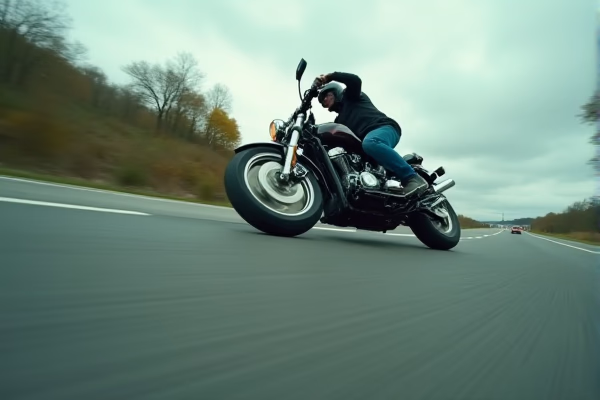
It’s a common tactic. Insurance companies frequently attempt to shift blame onto the motorcyclist, and allegations of speeding are a favorite method. They’ll often cite the police report, witness statements, or even attempt to reconstruct the accident to support their claim. However, a police report is often preliminary and doesn’t definitively establish speed. Witness accounts can be unreliable, and accident reconstruction is subject to interpretation and error.
The key to defending against a speeding accusation lies in gathering comprehensive evidence. This includes obtaining the full police report, interviewing any independent witnesses, and, crucially, consulting with an accident reconstruction expert. We’ll also thoroughly examine the other driver’s actions leading up to the crash. Were they distracted? Did they fail to yield the right-of-way? These factors often overshadow the issue of speed.
As a personal injury attorney with over 13 years of experience practicing in San Diego, I’ve seen this scenario play out countless times. I was trained by a former insurance defense attorney, giving me intimate knowledge of how insurance companies evaluate, devalue, and deny claims. They are masters of creating doubt, and it’s my job to dismantle their arguments and build a strong case on your behalf.
Can the Police Report Be Used Against Me?
While a police report can be introduced as evidence, it’s rarely conclusive. The investigating officer’s opinion on speed is often based on limited information and a quick assessment of the scene. The officer may not have used precise measuring tools or considered all relevant factors. Furthermore, the report’s conclusions are not admissible in court as definitive proof of speed.
We’ll carefully review the report for inaccuracies or omissions. Did the officer properly investigate the scene? Were there any contributing factors they overlooked? If the report is flawed, we can challenge its validity and present our own evidence to counter the claims of speeding.
What Evidence Can Prove I Wasn’t Speeding?
Several types of evidence can help demonstrate that you were not exceeding the speed limit. This includes dashcam footage (if available), witness testimony, and expert analysis. Accident reconstruction experts can use data from the vehicles’ event data recorders (EDR) – often called “black boxes” – to determine the speed of both motorcycles and cars involved. CVC § 21658.1 defines lane splitting as legal, and we can leverage this to show that your speed was reasonable given the traffic conditions.
How Does Comparative Fault Affect My Claim?
California operates under a ‘pure’ comparative fault system. This means that even if you were partially at fault for the accident, you can still recover damages. However, your compensation will be reduced by your percentage of fault. If the insurance company can prove you were 30% at fault due to speeding, your recovery will be reduced by 30%. Civ. Code § 1714 outlines this principle. It’s crucial to minimize your percentage of fault to maximize your potential recovery.
What If There Were No Witnesses or Dashcam Footage?
Even without direct evidence like witnesses or dashcam footage, we can still build a strong defense. We’ll focus on the other driver’s negligence. Did they violate traffic laws? Were they distracted or impaired? We’ll also examine the physical evidence at the scene, such as skid marks and vehicle damage, to reconstruct the accident and determine the likely sequence of events. We can also explore the possibility of hiring an independent accident reconstruction expert to provide an unbiased assessment.
What Role Does Motorcycle Licensing Play in These Cases?
While operating a motorcycle without a valid Class M1 or M2 endorsement is unlawful in California, CVC § 12500(b) states that a lack of an endorsement doesn’t automatically establish fault. The insurance company would need to prove that your lack of skill directly contributed to the accident. We can counter this argument by demonstrating your experience and safe riding habits.
What Should I Do If the Insurance Adjuster Asks for a Recorded Statement?
Never provide a recorded statement to the insurance adjuster without first consulting with an attorney. They are trained to ask leading questions designed to elicit information that can be used against you. A seemingly innocent answer can be twisted and misinterpreted to undermine your claim. Let me handle all communications with the insurance company on your behalf.
How Long Do I Have to File a Lawsuit?
In California, you have a **two-year** window from the date of the motorcycle accident to file a lawsuit for personal injury. CCP § 335.1 outlines this statute of limitations. Because evidence at a crash scene—such as skid marks or GoPro footage—can disappear quickly, immediate filing is critical to preserve the integrity of the claim.
What If the Accident Involved a Government Vehicle or Road Hazard?
If a motorcycle accident involves a government-owned vehicle or a dangerous road condition like loose gravel, potholes, or poorly marked construction zones, a formal administrative claim **MUST** be presented within **6 months** (180 days). Gov. Code § 911.2 details this requirement under the Government Tort Claims Act. Failure to meet this strict deadline can result in the permanent loss of your right to recover.
What If the Other Driver Was Uninsured?
If the at-fault driver lacks insurance, you can pursue a claim under your own Uninsured Motorist (UM) coverage. Ins. Code § 11580.2 requires insurers to offer this coverage. It’s essential to review your policy to determine your UM limits and file a claim promptly.
What If the Other Driver Had a High BAC?
If the other driver was driving under the influence of alcohol, it is unlawful for any person who is under the influence of alcohol to drive a vehicle. CVC § 23152(a) outlines this law. Proving intoxication or ‘malice’ allows for the pursuit of exemplary (punitive) damages, designed to punish the defendant and increase the total recovery beyond standard medical and wage losses.