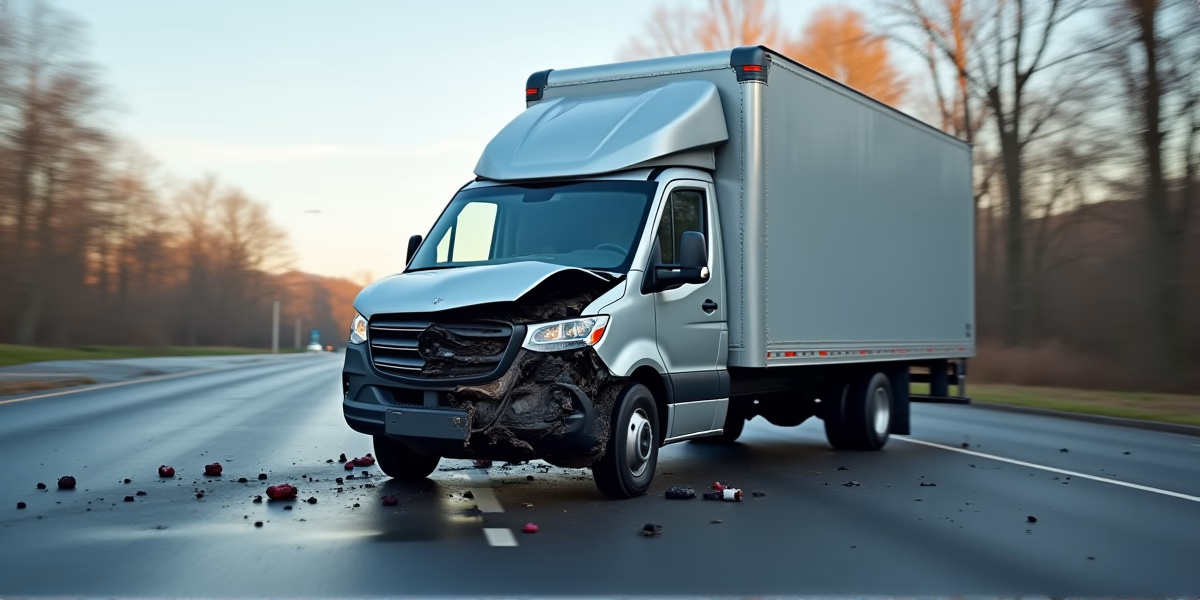
What Evidence Proves A Truck Was Driving Too Fast?

Truck accidents involving excessive speed are particularly complex. Unlike a typical car crash, proving a truck was speeding isn’t always as simple as looking at a speedometer reading. Insurance companies will aggressively fight to minimize their liability, often claiming the driver was within legal limits or that other factors caused the collision. That’s where a deep understanding of federal regulations and forensic evidence becomes critical.
The first thing to understand is that the legal speed limit for commercial trucks in California is often lower than for passenger vehicles. This is because of the increased stopping distance and potential for catastrophic damage a large truck presents. Establishing this baseline is the first step in building a strong case. We’ve seen numerous instances where a truck driver *was* technically within the general speed limit, but still traveling too fast for the prevailing conditions – rain, fog, or heavy traffic – which constitutes negligence.
I’ve been practicing personal injury law in San Diego for over 13 years, and I’ve seen firsthand how insurance companies attempt to devalue claims involving truck accidents. Trained by a former insurance defense attorney, I have intimate knowledge of their tactics and evaluation methods. This experience allows me to anticipate their arguments and gather the necessary evidence to protect my clients’ rights.
How Can Electronic Logging Device (ELD) Data Prove a Truck Was Speeding?
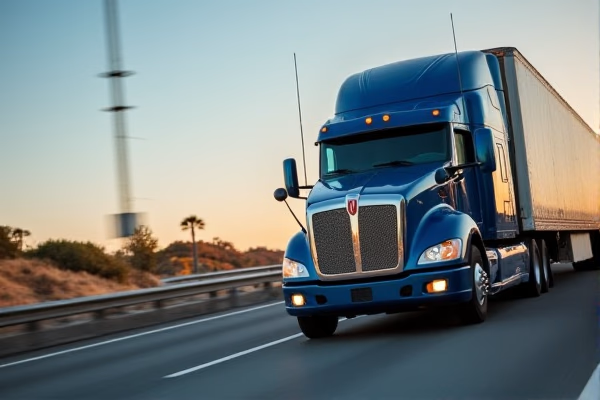
Electronic Logging Devices (ELDs) are now mandated for most commercial trucks, and they record a wealth of data, including speed, distance traveled, and hours of service. This data is a goldmine for accident reconstruction experts. We routinely subpoena ELD data to determine if a driver violated federal Hours of Service (HOS) regulations, which indirectly demonstrates speeding. For example, if a driver was required to be off-duty but the ELD shows continuous driving, it suggests they were pushing the limits and likely exceeding safe speeds to make up for lost time. Under 49 CFR § 395, these regulations are strictly enforced.
However, ELD data isn’t foolproof. It can be tampered with or misinterpreted. That’s why it’s crucial to have an experienced accident reconstructionist analyze the data and identify any discrepancies. They can also correlate the ELD data with other evidence, such as dashcam footage and witness statements.
What Role Do Dashcam and Telematics Systems Play in Establishing Speed?
Many trucking companies now utilize dashcam systems and telematics data. Dashcam footage can provide a visual record of the truck’s speed leading up to the accident. Telematics systems record even more detailed information, including braking patterns, acceleration rates, and location data. This data can be invaluable in reconstructing the events of the crash and proving the truck driver was traveling too fast. It’s important to act quickly to preserve this evidence, as it can be overwritten or destroyed.
Can Accident Reconstruction Experts Determine Speed Without Electronic Data?
Yes, absolutely. Even without ELD or dashcam data, accident reconstruction experts can use a variety of methods to estimate a truck’s speed. These methods include analyzing skid marks, vehicle damage, the point of impact, and the road conditions. They can also use physics-based calculations to determine the speed of the vehicles involved. The more data points available, the more accurate the reconstruction will be.
What if the Truck Driver Claims They Were Following Traffic Flow?
The “following traffic flow” defense is common, but it’s often insufficient to absolve a truck driver of responsibility. While it’s true that drivers generally shouldn’t drive significantly faster or slower than surrounding traffic, they still have a duty to operate their vehicle safely and within legal limits. If the overall traffic flow was already exceeding the speed limit, the truck driver was still negligent for participating in that unlawful behavior. Furthermore, if the traffic flow was unsafe due to weather conditions or other factors, the driver has a heightened duty to reduce their speed accordingly.
What Happens if the Police Report Doesn’t Mention Speed as a Factor?
Don’t rely solely on the police report. Police officers are often limited in their investigation and may not have the resources or expertise to conduct a thorough accident reconstruction. They may also prioritize traffic control over detailed evidence gathering. It’s essential to conduct your own independent investigation, including hiring an accident reconstruction expert to analyze the evidence and determine if speed was a contributing factor. We frequently find discrepancies between the police report and our own findings.
What is the Statute of Limitations for Filing a Truck Accident Lawsuit in California?
In California, you have a **two-year** window from the date of the truck accident to file a lawsuit. Because trucking companies often begin evidence destruction (like purging ELD data) as soon as the law allows, immediate filing is critical to preserve the integrity of the claim. Under CCP § 335.1, failing to meet this deadline will likely result in the loss of your legal rights.
What if the Accident Involved a Government Vehicle or Road Hazard?
If a truck accident involves a government-owned vehicle or a dangerous road condition maintained by a public entity, a formal administrative claim **MUST** be presented within **6 months** (180 days). Failure to meet this strict deadline under the Government Tort Claims Act can result in the permanent loss of your right to recover. This is a complex process, and it’s crucial to consult with an attorney experienced in government liability claims. Under Gov. Code § 911.2, the requirements are very specific.
How Does California’s “ABC Test” Affect Trucking Claims Involving Independent Contractors?
California’s ‘ABC test’ determines if a delivery driver (Amazon/FedEx) is an employee or contractor. Even if labeled a ‘contractor,’ a company may be liable if they exercise control over the driver’s work, a key factor in San Diego delivery truck litigation. This is a nuanced area of law, and it’s important to have an attorney who understands the intricacies of the ABC test. Under Labor Code § 2775, the classification of a worker can significantly impact the potential for recovery.
What is Vicarious Liability and How Does it Apply to Trucking Accidents?
Under the doctrine of **vicarious liability** (respondeat superior), a principal is responsible to third persons for the negligence of their agent in the transaction of business. This holds the trucking company legally liable for the wrongful acts of its drivers committed within the scope of their employment. Even if the driver was at fault, the trucking company can be held accountable for their negligence. Under Civ. Code § 2338, this is a common legal theory in trucking accident cases.
What are the Speed Limits for Commercial Trucks in California?
In California, commercial trucks (including semi-tractors with three or more axles) are strictly prohibited from exceeding **55 miles per hour** on any highway. In San Diego freeway crashes, proving a violation of this speed limit is a primary tool for establishing statutory negligence. Violating this speed limit can create a presumption of negligence, making it easier to recover damages. Under CVC § 22406, these limits are clearly defined.