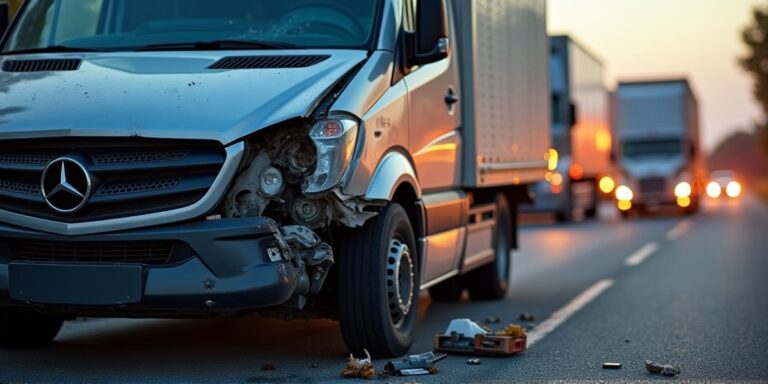
What Factors Affect Truck Accident Payouts?

Determining the factors that affect truck accident payouts is complex. Unlike typical car accidents, truck accidents often involve multiple parties – the driver, the trucking company, the cargo owner, and potentially even the truck manufacturer. Each party may have its own insurance coverage and legal defenses. Furthermore, the sheer size and weight of a commercial truck dramatically increase the potential for severe injuries and fatalities, leading to higher overall claim values.
One of the most significant factors is the extent of your injuries. More severe injuries, requiring extensive medical treatment, rehabilitation, and ongoing care, naturally result in larger payouts. This includes not only the immediate costs of hospitalization, surgery, and medication but also future medical expenses, lost income, and diminished earning capacity. The long-term impact of the injuries on your quality of life is also a critical consideration.
I’ve been practicing personal injury law in San Diego for over 13 years, and I’ve seen firsthand how insurance companies attempt to minimize payouts. I was trained by a former insurance defense attorney, giving me intimate knowledge of how they evaluate, devalue, and deny claims. This experience allows me to anticipate their strategies and build a strong case on behalf of my clients.
What types of damages can I recover in a truck accident claim?

California law allows you to recover a wide range of damages following a truck accident. These damages are designed to compensate you for all of your losses, both economic and non-economic. Economic damages include medical expenses (past and future), lost wages, property damage, and other out-of-pocket costs. Non-economic damages cover pain and suffering, emotional distress, loss of enjoyment of life, and disfigurement.
In some cases, you may also be entitled to punitive damages. These are awarded to punish the defendant for particularly egregious conduct, such as reckless driving or intentional wrongdoing. Proving entitlement to punitive damages requires a higher standard of evidence, but they can significantly increase the overall value of your claim.
How does the truck driver’s negligence affect the payout?
Establishing negligence is crucial in any truck accident claim. Negligence can take many forms, including speeding, distracted driving, fatigue, improper lane changes, and failure to maintain the truck properly. Evidence such as police reports, witness statements, and the truck’s event data recorder (EDR) can be used to prove negligence. In California, proving a violation of a traffic law, like exceeding the 55 mph speed limit for commercial trucks (CVC § 22406), can create a presumption of negligence.
The more egregious the driver’s negligence, the higher the potential payout. For example, a driver who was under the influence of alcohol or drugs will likely face a much larger claim than a driver who simply made a minor error in judgment.
What role does the trucking company play in determining the payout?
The trucking company can be held liable for the negligence of its drivers under the doctrine of **vicarious liability** (Civ. Code § 2338). This means they are legally responsible for the wrongful acts of their employees committed within the scope of their employment. Additionally, the trucking company can be directly liable for negligent hiring, training, or supervision of its drivers. If the company failed to properly vet a driver’s background or provide adequate training, they may be held responsible for the accident.
Furthermore, the trucking company’s insurance policy limits will significantly impact the potential payout. It’s essential to identify all potential sources of coverage, including the company’s primary policy and any excess or umbrella policies.
How long do I have to file a truck accident claim in California?
California law provides a **two-year** window from the date of the truck accident to file a lawsuit (CCP § 335.1). Because trucking companies often begin evidence destruction (like purging ELD data) as soon as the law allows, immediate filing is critical to preserve the integrity of the claim.
It’s also important to be aware of potential government claim deadlines if the accident involved a government-owned vehicle or a dangerous road condition maintained by a public entity. A formal administrative claim **MUST** be presented within **6 months** (180 days) under the Government Tort Claims Act (Gov. Code § 911.2). Failure to meet this strict deadline can result in the permanent loss of your right to recover.
What if the driver was an independent contractor, not an employee?
Determining whether a driver is an employee or an independent contractor can be complex. California’s ‘ABC test’ determines if a delivery driver (Amazon/FedEx) is an employee or contractor (Labor Code § 2775). Even if labeled a ‘contractor,’ a company may be liable if they exercise control over the driver’s work, a key factor in San Diego delivery truck litigation.
If the driver is deemed an independent contractor, it may be more difficult to recover damages, but it’s not impossible. You may be able to pursue a claim against the company if they were negligent in hiring or supervising the contractor.
What should I do if an insurance adjuster asks me to give a recorded statement?
Insurance adjusters often request recorded statements early in the claims process. While you are not legally obligated to provide a statement, doing so can be detrimental to your claim. Adjusters are trained to ask leading questions and elicit information that can be used to devalue your case. It’s best to politely decline the request and consult with an attorney before providing any statement.
I strongly advise my clients to avoid direct communication with insurance companies. I can handle all communication on your behalf, protecting your rights and ensuring that you receive a fair settlement.
How do medical liens affect my truck accident settlement?
If you received medical treatment for your injuries, the medical providers may place a lien on your settlement. This lien gives them the right to be reimbursed for their services from any recovery you receive. Negotiating these liens is a critical part of the settlement process. I have extensive experience working with medical providers to reduce lien amounts and ensure that you receive the maximum possible compensation.
It’s important to understand the difference between ER billing and medical liens. ER bills are often significantly higher than the actual cost of treatment, and they may not be subject to the same lien laws as other medical providers.
What if the insurance company is delaying my claim or making a low settlement offer?
Insurance companies often employ delay and stalling tactics to minimize payouts. They may request excessive documentation, deny legitimate claims, or offer a settlement that is far below the value of your case. If you are experiencing these issues, it’s essential to consult with an attorney who can aggressively advocate on your behalf.
I can help you navigate the claims process, gather evidence to support your claim, and negotiate a fair settlement with the insurance company. I am not afraid to file a lawsuit if necessary to protect your rights.
What is UM/UIM coverage, and how does it apply to truck accident claims?
Uninsured/Underinsured Motorist (UM/UIM) coverage protects you if you are injured by an uninsured or underinsured driver. Even if the truck driver has insurance, their policy limits may not be sufficient to cover all of your damages. In this case, you may be able to make a claim under your own insurance policy’s UM/UIM coverage. The arbitration procedures for UM/UIM claims can be complex, and it’s essential to have an attorney who is familiar with the process.
Understanding the intricacies of your own insurance policy is crucial to maximizing your recovery.
How important is evidence preservation in a truck accident case?
Evidence preservation is critical in any truck accident case. The trucking company may attempt to destroy evidence, such as the truck’s event data recorder (EDR) data, maintenance records, and driver logs. It’s essential to send a spoliation letter to the company immediately after the accident, demanding that they preserve all relevant evidence. The data overwrite windows for ELD and ECM systems are often short, so prompt action is crucial.
I can help you gather and preserve all necessary evidence to support your claim, including dashcam footage, police reports, witness statements, and medical records.