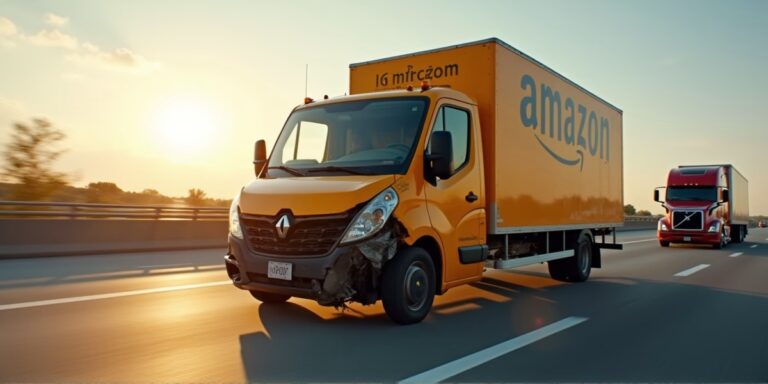
What If A Truck Accident Happens On Interstate 5 In San Diego?

Dealing with a truck accident on a major highway like Interstate 5 presents unique challenges. The sheer size and weight of commercial vehicles mean injuries are often catastrophic, and the investigations are far more complex than a typical car crash. Multiple parties can be liable – the driver, the trucking company, the freight broker, and even the maintenance provider. It’s crucial to understand your rights and protect your claim from day one.
One of the first hurdles is determining where the accident occurred and which jurisdiction’s laws apply. While the accident happened on Interstate 5 in San Diego, the trucking company might be based in another state, and the freight originated elsewhere. California law generally governs accidents that occur within its borders, but establishing that can be a point of contention. This is where experienced legal counsel is invaluable.
I’ve been practicing personal injury law in San Diego for over 13 years, and I’ve seen firsthand how insurance companies attempt to minimize payouts in truck accident cases. Trained by a former insurance defense attorney, I have intimate knowledge of how they evaluate, devalue, and deny claims. They’ll often focus on blaming the victim or downplaying the severity of the injuries. Don’t fall into that trap.
What steps should I take immediately after a truck accident on I-5?
The immediate aftermath of a truck accident is critical. First, ensure your safety and the safety of others. If possible, move to a safe location away from traffic. Then, call 911 to report the accident and request medical attention, even if you don’t feel immediately injured. Many injuries, like internal bleeding or traumatic brain injuries, aren’t apparent right away.
Next, gather as much information as possible. This includes the truck driver’s information (license, registration, insurance), the trucking company’s details, and contact information for any witnesses. Take photos of the accident scene, including the damage to all vehicles, the road conditions, and any visible injuries. Crucially, do not admit fault or provide a recorded statement to the insurance company without speaking to an attorney.
Finally, document everything. Keep records of all medical bills, lost wages, and any other expenses related to the accident. The more evidence you have, the stronger your claim will be.
How is a truck accident investigation different from a car accident investigation?
Truck accident investigations are significantly more complex than car accident investigations due to the numerous federal and state regulations governing the trucking industry. Investigators will examine the truck driver’s logbooks to verify compliance with Hours of Service (HOS) regulations, as outlined in 49 CFR § 395. They’ll also review the truck’s maintenance records to ensure it was properly inspected and maintained.
Furthermore, the Electronic Logging Device (ELD) data can provide a detailed history of the driver’s activity, including speed, braking patterns, and rest stops. Investigators may also look into the driver’s qualifications, including their Commercial Driver’s License (CDL) and any prior violations. Accident reconstruction experts are often needed to determine the cause of the crash and establish liability.
The Federal Motor Carrier Safety Administration (FMCSA) also plays a role in truck accident investigations, particularly if there are violations of federal safety regulations. Understanding these regulations is essential for building a strong case.
What types of damages can I recover in a truck accident claim?
In a truck accident case, you may be entitled to recover a wide range of damages, including medical expenses (past and future), lost wages, property damage, and pain and suffering. If the accident resulted in a permanent disability, you may also be able to recover damages for loss of earning capacity and diminished quality of life.
In cases of particularly egregious negligence, such as drunk driving or reckless disregard for safety, you may also be entitled to punitive damages. These damages are intended to punish the wrongdoer and deter similar conduct in the future. It’s important to work with an attorney who understands the full scope of damages available in your case.
Furthermore, if you’ve lost a loved one in a truck accident, you may be able to pursue a wrongful death claim, seeking compensation for funeral expenses, loss of financial support, and the loss of companionship. This is a particularly sensitive and complex area of law, requiring the guidance of a skilled attorney.
What if the truck driver was working as an independent contractor?
Determining whether a truck driver is an employee or an independent contractor can be a complex legal issue. California’s ‘ABC test,’ as defined in Labor Code § 2775, is used to make this determination. Even if the driver is labeled as a ‘contractor,’ the trucking company may still be liable if they exercise control over the driver’s work.
Factors that suggest an employee relationship include the company’s control over the driver’s schedule, routes, and methods of operation. If the driver is required to use the company’s equipment or follow specific training protocols, that also points to an employee relationship. Establishing this relationship is crucial for holding the trucking company accountable for the driver’s negligence.
In San Diego delivery truck litigation, this is a common issue, as many companies attempt to classify drivers as contractors to avoid liability. However, a skilled attorney can investigate the facts and determine the true nature of the relationship.
What is vicarious liability and how does it apply to truck accidents?
Vicarious liability, also known as respondeat superior, holds a principal legally responsible for the wrongful acts of their agent committed within the scope of their employment. In the context of truck accidents, this means the trucking company can be held liable for the negligence of its drivers, even if the company itself wasn’t directly at fault. This principle is established under Civ. Code § 2338.
To establish vicarious liability, it must be shown that the driver was acting within the scope of their employment at the time of the accident. This typically means the driver was performing their job duties, such as delivering freight or transporting goods. The trucking company’s insurance company will often dispute this, arguing that the driver was acting outside the scope of their employment.
A thorough investigation of the driver’s activities leading up to the accident is essential for proving vicarious liability. This may involve reviewing the driver’s logbooks, dispatch records, and other documentation.
What if the truck accident involved a government vehicle or roadway hazard?
If a truck accident involves a government-owned vehicle or a dangerous road condition maintained by a public entity, a formal administrative claim **MUST** be presented within **6 months** (180 days) under the Government Tort Claims Act, as outlined in Gov. Code § 911.2. Failure to meet this strict deadline can result in the permanent loss of your right to recover.
These claims are often complex and require specific documentation and procedures. It’s crucial to work with an attorney who is familiar with the Government Tort Claims Act and can ensure your claim is properly filed and processed. The government entity will often investigate the claim and may deny it outright or offer a low settlement.
In San Diego, many accidents occur on state highways or roads maintained by the city or county. Understanding the government’s liability and the claim filing process is essential for maximizing your recovery.
What should I do if the insurance company asks me to give a recorded statement?
Insurance companies often request recorded statements from accident victims shortly after an accident. While you are not legally obligated to provide a statement, doing so can be detrimental to your claim. Insurance adjusters are trained to ask leading questions and elicit information that can be used to minimize your payout.
They may try to get you to admit fault or downplay the severity of your injuries. Even seemingly harmless statements can be twisted and used against you later in the negotiation process. Politely decline the request for a recorded statement and refer them to your attorney.
Your attorney can handle all communications with the insurance company and ensure your rights are protected. Do not attempt to negotiate with the insurance company on your own.
What is the statute of limitations for filing a truck accident lawsuit in California?
California law provides a **two-year** window from the date of the truck accident to file a lawsuit, as defined in CCP § 335.1. Because trucking companies often begin evidence destruction (like purging ELD data) as soon as the law allows, immediate filing is critical to preserve the integrity of the claim.
This deadline applies to all types of truck accident claims, including those involving negligence, wrongful death, and product liability. If you fail to file a lawsuit within the two-year statute of limitations, your claim will be barred, and you will lose your right to recover compensation.
It’s important to consult with an attorney as soon as possible after a truck accident to ensure your claim is filed within the statute of limitations. Don’t delay seeking legal advice, as time is of the essence.
What if I have medical liens after my truck accident?
Medical liens arise when healthcare providers treat you for injuries sustained in a truck accident and seek reimbursement for their services. These liens can complicate your settlement process, as the healthcare provider has a legal right to be paid from any recovery you receive. It’s important to understand your options for resolving medical liens.
Negotiating with healthcare providers to reduce the amount of the lien is often possible. Your attorney can work with the providers to reach a fair settlement. In some cases, it may be necessary to file a lawsuit to resolve the lien dispute. Understanding the priority of medical liens and the applicable California laws is crucial for protecting your net recovery.
ER billing practices can also differ from standard medical liens, often resulting in higher charges. Your attorney can help you navigate these complexities and ensure you are not overpaying for medical services.
How does comparative fault affect my truck accident claim?
California’s ‘pure’ comparative fault system applies to trucking claims, as established under Civ. Code § 1714. Even if a truck driver argues you shared responsibility, you can still recover damages; however, your total compensation will be reduced by your percentage of fault.
The insurance company will often attempt to assign you a percentage of fault, arguing that you were speeding, distracted, or otherwise negligent. It’s important to gather evidence to refute these claims and demonstrate that the truck driver was primarily responsible for the accident. Accident reconstruction experts and witness testimony can be invaluable in establishing fault.
Even a small percentage of fault can significantly reduce your recovery, so it’s crucial to fight back against any attempts to unfairly blame you for the accident.
What is the process for UM/UIM arbitration in a truck accident case?
If the truck driver was underinsured or uninsured, you may be able to pursue a claim under your own Uninsured/Underinsured Motorist (UM/UIM) policy. This process typically involves arbitration, where a neutral third party will determine the amount of compensation you are entitled to. Understanding the procedures for UM/UIM arbitration is essential for maximizing your recovery.
Your insurance company will often attempt to minimize your payout in a UM/UIM arbitration. It’s important to work with an attorney who is familiar with the arbitration process and can effectively advocate for your rights. Preparing a strong case with compelling evidence is crucial for success.
The rules and procedures for UM/UIM arbitration can be complex, so it’s important to have legal representation throughout the process.
How important is evidence preservation in a truck accident case?
Evidence preservation is critical in a truck accident case. Trucking companies often have a duty to preserve evidence related to the accident, including the truck’s maintenance records, driver’s logbooks, and ELD data. However, they may attempt to destroy or alter evidence to minimize their liability. A spoliation letter, formally requesting the preservation of evidence, is often necessary.
The data overwrite windows for ELD data and other electronic records can be short, so it’s important to act quickly to secure this evidence. Your attorney can send a spoliation letter to the trucking company and investigate any potential evidence destruction. Failure to preserve evidence can result in sanctions and a negative inference at trial.
Documenting the accident scene, gathering witness testimony, and preserving all relevant records are essential for building a strong case.