Are Intersections The Most Dangerous Places For Motorcyclists?

Intersections are, statistically, the most perilous locations for motorcyclists. This isn’t simply due to increased traffic volume; it’s a complex interplay of driver inattention, failure to yield, and the inherent difficulty in judging a motorcycle’s speed and distance. Cars often misjudge the closing speed of a motorcycle, leading to dangerous maneuvers like turning left in front of oncoming bikes. The consequences can be devastating, ranging from minor abrasions to catastrophic injuries and fatalities.
The vulnerability of a motorcyclist in an intersection is amplified by several factors. Unlike drivers cocooned in steel frames, riders have minimal protection. A seemingly minor collision can result in severe trauma. Furthermore, intersections often involve multiple potential points of impact – oncoming traffic, cross-traffic, and pedestrians – increasing the risk of a secondary collision after the initial impact. This is why understanding your rights and taking swift action after an intersection accident is paramount.
I’ve spent over 13 years representing motorcyclists in San Diego, and I’ve seen firsthand the devastating impact these accidents have on individuals and their families. Trained by a former insurance defense attorney, I possess intimate knowledge of how insurance companies evaluate, devalue, and deny claims. They often exploit the rider’s lack of legal knowledge, attempting to shift blame or minimize the extent of injuries. That’s why having experienced legal counsel is crucial to leveling the playing field.
What should I do immediately after a motorcycle accident at an intersection?
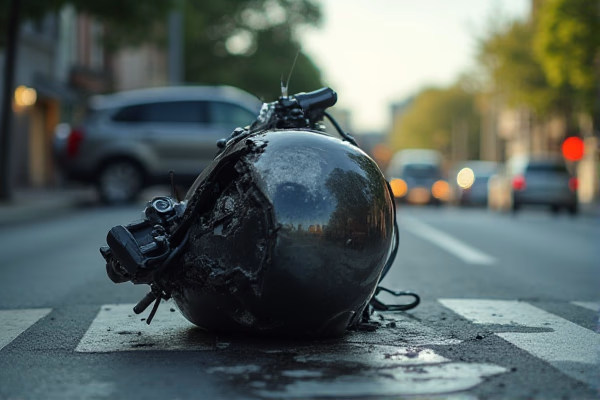
Your immediate actions following an intersection accident are critical for preserving your claim. First, prioritize your safety. If possible, move your motorcycle to a safe location away from traffic. Then, call 911 to report the accident and request medical assistance, even if you don’t feel immediately injured. Adrenaline can mask the severity of injuries. Document everything – take photos of the damage to your motorcycle, the other vehicle(s), the intersection itself, and any visible injuries. Obtain contact information from all parties involved, including witnesses.
Crucially, avoid making any statements to the other driver or their insurance company. Anything you say can be used against you later. Politely decline to provide information and refer them to your attorney. It’s also vital to preserve any evidence, such as dashcam footage or the names of any independent witnesses. The sooner you gather this information, the stronger your case will be.
How does California law apply to intersection accidents involving motorcycles?
California law places a significant responsibility on drivers to exercise due care when approaching intersections. Drivers must yield the right-of-way to oncoming traffic and pedestrians, and they are prohibited from making unsafe turns. CVC § 21801 specifically addresses the duty to yield when turning left, a common cause of motorcycle accidents. If a driver violates these laws and causes an accident, they are liable for your damages.
Furthermore, California’s ‘pure’ comparative fault system applies. Civ. Code § 1714 means you can recover damages even if you were partially at fault, though your compensation will be reduced by your percentage of fault. Establishing the other driver’s negligence is key, and this often involves gathering police reports, witness statements, and expert testimony.
What types of damages can I recover after an intersection motorcycle accident?
You are entitled to recover both economic and non-economic damages after an intersection motorcycle accident. Economic damages include medical expenses (past and future), lost wages, property damage (motorcycle repair or replacement), and other out-of-pocket costs. Non-economic damages compensate you for pain and suffering, emotional distress, loss of enjoyment of life, and disfigurement. CACI No. 3905A outlines the factors courts consider when assessing non-economic damages.
In some cases, you may also be entitled to punitive damages if the other driver’s conduct was particularly reckless or malicious. Civ. Code § 3294 governs the award of punitive damages, which are designed to punish the defendant and deter similar conduct in the future.
How long do I have to file a lawsuit after a motorcycle accident in San Diego?
California law provides a **two-year** window from the date of the motorcycle accident to file a lawsuit for personal injury. CCP § 335.1 dictates this statute of limitations. Because evidence at a crash scene—such as skid marks or GoPro footage—can disappear quickly, immediate filing is critical to preserve the integrity of the claim.
It’s important to note that this two-year period begins to run from the date of the accident, not the date you discover the full extent of your injuries. Therefore, it’s crucial to consult with an attorney as soon as possible to ensure you don’t miss the deadline.
What if the other driver is uninsured or underinsured?
If the at-fault driver lacks insurance or has insufficient coverage to compensate you for your damages, you may be able to pursue a claim under your own Uninsured Motorist (UM) or Underinsured Motorist (UIM) coverage. Ins. Code § 11580.2 requires insurers to offer this coverage. UM/UIM claims can be complex, often involving disputes over policy limits and coverage interpretations.
Navigating these claims requires a thorough understanding of insurance law and negotiation tactics. An experienced attorney can help you maximize your recovery and protect your rights.
What is the role of a recorded statement in an intersection accident claim?
Insurance companies frequently request recorded statements from accident victims. While you are not legally obligated to provide one, doing so can be detrimental to your claim. Insurance adjusters are trained to ask leading questions designed to minimize your damages or shift blame. They may attempt to elicit statements that contradict your initial report or downplay the severity of your injuries.
It’s best to politely decline the request for a recorded statement and refer the insurance company to your attorney. Your attorney can advise you on whether a statement is necessary and, if so, prepare you for the questions you may face.
How do medical liens affect my motorcycle accident settlement?
If you received medical treatment for your injuries, the healthcare provider may place a lien on your settlement to ensure they are reimbursed for their services. Civ. Code § 3040 limits the amount a health insurance company or medical provider can claim from your settlement. Negotiating these liens is a crucial part of the settlement process.
An attorney can help you understand the validity of the lien, negotiate a reduced amount, and ensure that your settlement protects your financial interests.
What if the accident involved a government vehicle or roadway hazard?
If a motorcycle accident involves a government-owned vehicle or a dangerous road condition like loose gravel, potholes, or poorly marked construction zones, a formal administrative claim **MUST** be presented within **6 months** (180 days). Gov. Code § 911.2 outlines this strict deadline under the Government Tort Claims Act. Failure to meet this deadline can result in the permanent loss of your right to recover.
Government claims are often more complex than claims against private individuals, requiring specific procedures and documentation. An attorney experienced in government liability can help you navigate this process and maximize your chances of success.
What if the insurance company is delaying my claim or making a low settlement offer?
Insurance companies often employ delay and stalling tactics to minimize their payouts. They may request excessive documentation, deny legitimate claims, or offer a settlement amount that is far below your actual damages. If you suspect the insurance company is acting in bad faith, it’s crucial to consult with an attorney.
An attorney can investigate the reasons for the delay, challenge the insurance company’s denials, and negotiate a fair settlement on your behalf. In some cases, litigation may be necessary to protect your rights.
What evidence should I preserve after a motorcycle accident at an intersection?
Evidence preservation is critical in any motorcycle accident claim. This includes photos of the accident scene, damage to your motorcycle and other vehicles, and any visible injuries. Preserve any dashcam footage, witness contact information, and the police report. Additionally, keep detailed records of your medical treatment, lost wages, and other expenses.
It’s also important to be aware of the potential for spoliation of evidence – the intentional destruction or alteration of evidence. If you suspect the other party is attempting to destroy evidence, your attorney can issue a spoliation letter demanding they preserve all relevant information.