How Do Lawyers Investigate Truck Maintenance Failures?

Investigating truck maintenance failures is a complex undertaking, far beyond simply obtaining a police report. It requires a deep understanding of federal and state regulations, meticulous record-keeping requirements, and the ability to identify subtle clues that point to negligence. As a personal injury attorney practicing in San Diego for over 13 years, I’ve seen firsthand how insurance companies attempt to downplay these failures. I was trained by a former insurance defense attorney, giving me intimate knowledge of how they evaluate, devalue, and deny claims.
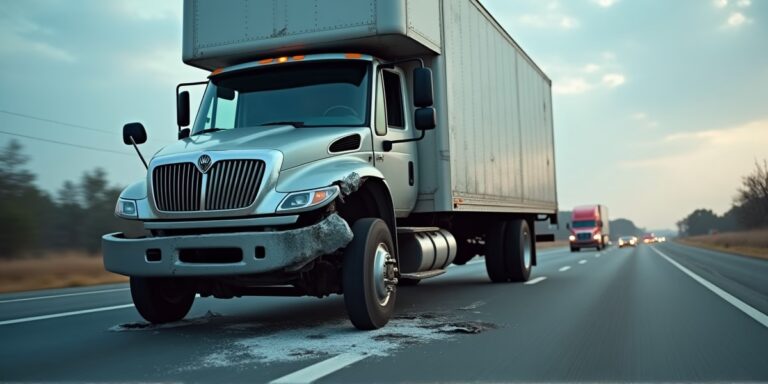
The first step in any truck maintenance investigation is securing the truck itself. If possible, we work to obtain a court order to prevent the trucking company from repairing or altering the vehicle before a thorough inspection can be conducted. This is critical, as evidence can be easily destroyed or concealed. We then assemble a team of experts, including certified mechanics specializing in commercial vehicles, accident reconstruction specialists, and potentially even forensic engineers.
What types of records are crucial in a truck maintenance failure investigation?
A wealth of information exists regarding a truck’s maintenance history, and obtaining these records is paramount. We’ll subpoena the trucking company’s maintenance logs, repair bills, inspection reports, and driver logs. These records should detail when and how often the truck was serviced, what repairs were performed, and who performed them. Discrepancies or missing information are red flags that suggest a lack of proper maintenance.
Federal regulations, specifically 49 CFR § 395, dictate strict record-keeping requirements for commercial vehicles. These regulations outline what information must be documented, for how long, and in what format. We scrutinize these records for any violations, such as overdue inspections, falsified logs, or a pattern of deferred maintenance. We also examine the driver’s qualifications and training records to ensure they were properly licensed and certified to operate the vehicle.
Beyond the trucking company’s records, we’ll also investigate the manufacturer’s maintenance schedule for the specific truck model. This schedule outlines recommended service intervals and procedures, providing a benchmark for evaluating the company’s adherence to industry standards.
How do mechanics identify evidence of truck maintenance negligence?
Certified mechanics play a vital role in identifying physical evidence of maintenance failures. They’ll conduct a comprehensive inspection of the truck’s braking system, tires, steering components, lighting systems, and other critical safety features. They’ll look for signs of wear and tear, corrosion, improper repairs, or missing parts.
For example, a mechanic might discover that brake pads were worn down to a dangerously thin level, indicating they hadn’t been replaced in a timely manner. Or they might find evidence of a faulty weld on a steering component, suggesting a substandard repair. These findings can be crucial in establishing negligence.
We also often employ accident reconstruction specialists to analyze the truck’s black box data, also known as the Electronic Control Module (ECM). This data can reveal information about the truck’s speed, braking patterns, and any mechanical malfunctions that occurred leading up to the accident. This data is often critical in proving a maintenance failure contributed to the crash.
What role does the trucking company’s safety record play in these investigations?
A trucking company’s safety record is a telling indicator of its commitment to maintenance and driver safety. We’ll obtain the company’s FMCSA safety rating, which is based on a variety of factors, including inspections, crash history, and compliance with federal regulations. A poor safety rating suggests a systemic problem with the company’s operations.
We also investigate any prior crashes involving the company’s trucks, looking for patterns of similar maintenance failures. If the company has a history of neglecting maintenance, it strengthens the case for negligence. Furthermore, we’ll examine any complaints filed against the company with the FMCSA or other regulatory agencies.
In San Diego, we often find that trucking companies prioritize profits over safety, leading to corners being cut on maintenance and driver training. This negligence can have devastating consequences for innocent drivers like Javier.
What if the truck was leased to an independent owner-operator?
Determining liability can become more complex when a truck is leased to an independent owner-operator. In these cases, we need to investigate the terms of the lease agreement to understand who was responsible for maintaining the vehicle. Typically, the lease agreement will outline the responsibilities of both the leasing company and the owner-operator.
However, even if the owner-operator was technically responsible for maintenance, the leasing company may still be liable if they exercised control over the owner-operator’s operations. California’s ‘ABC test,’ as outlined in Labor Code § 2775, helps determine if the owner-operator was truly an independent contractor or an employee of the leasing company. If the leasing company controlled the owner-operator’s schedule, routes, or equipment, they may be held liable for their negligence.
It’s important to remember that proving negligence in these cases requires a thorough investigation and a strong understanding of the applicable laws and regulations.
What happens if the trucking company claims the driver was at fault?
Trucking companies often attempt to shift blame to the driver, arguing that the accident was caused by driver error. However, even if the driver made a mistake, the company may still be liable if they were negligent in their hiring, training, or supervision.
Under the doctrine of vicarious liability (respondeat superior), as outlined in Civ. Code § 2338, a principal is responsible for the negligence of their agent. This means the trucking company can be held liable for the wrongful acts of its drivers committed within the scope of their employment. We’ll investigate the driver’s qualifications, training records, and driving history to determine if the company exercised reasonable care in selecting and supervising them.
We also look for evidence of systemic problems within the company, such as unrealistic delivery schedules or inadequate driver training, which may have contributed to the accident.
How long do I have to file a lawsuit after a truck accident in California?
California law provides a two-year window from the date of the truck accident to file a lawsuit, as defined in CCP § 335.1. Because trucking companies often begin evidence destruction (like purging ELD data) as soon as the law allows, immediate filing is critical to preserve the integrity of the claim.
What should I do if an insurance adjuster asks me to give a recorded statement?
Insurance adjusters often request recorded statements shortly after an accident. While it may seem harmless, providing a recorded statement can be detrimental to your claim. Adjusters are trained to ask leading questions designed to minimize their liability. It’s best to politely decline the request and consult with an attorney before speaking to the insurance company.
We can handle all communications with the insurance company on your behalf, protecting your rights and ensuring you don’t inadvertently say something that could harm your case. Strong: Do not sign any documents or provide any information without first consulting with legal counsel.
What if I have medical liens that need to be resolved after my truck accident?
Medical liens are claims filed by healthcare providers for the cost of your medical treatment. Resolving these liens can be a complex process, especially if you have multiple providers. We can negotiate with the healthcare providers to reduce the amount of the liens and ensure they are paid fairly.
We also work to protect your rights from unreasonable billing practices and ensure you receive the maximum compensation for your medical expenses. Strong: Understanding the difference between ER billing and medical liens is crucial for maximizing your recovery.
What is a government claim and when is it required?
If a truck accident involves a government-owned vehicle or a dangerous road condition maintained by a public entity, a formal administrative claim MUST be presented within 6 months (180 days) under the Government Tort Claims Act, as outlined in Gov. Code § 911.2. Failure to meet this strict deadline can result in the permanent loss of your right to recover.
We can handle the preparation and filing of the government claim on your behalf, ensuring it meets all the necessary requirements. Strong: These claims have very specific requirements, so it’s essential to act quickly.
What happens when the insurance company makes a policy limits tender?
A policy limits tender is an offer from the insurance company to settle your claim for the maximum amount of their policy. While it may seem like a generous offer, it’s important to carefully consider whether it adequately compensates you for your damages. We can evaluate the offer and advise you on whether to accept it or pursue further litigation.
We also investigate whether there are other sources of recovery available, such as excess insurance policies or other responsible parties. Strong: Policy limits tenders often come with releases that prevent you from pursuing further claims, so it’s crucial to understand the implications before signing anything.