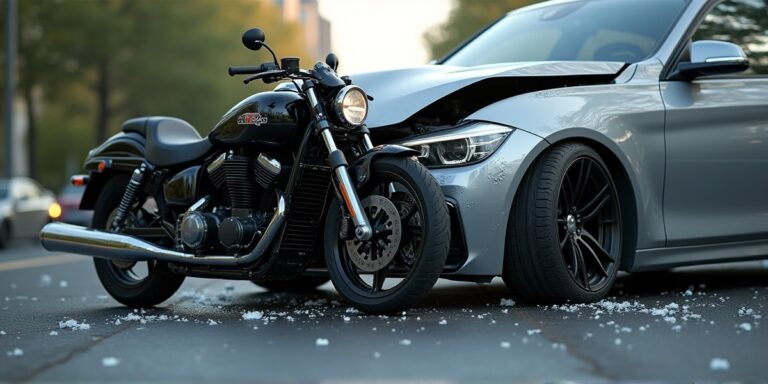
What If A Jury Is Biased Against Motorcyclists?

It’s a legitimate concern. Motorcyclists often face negative stereotypes and preconceived notions that can significantly impact a jury’s perception of a case. Jurors may harbor biases, consciously or unconsciously, associating motorcycles with risk-taking behavior or assuming riders are inherently reckless. Overcoming this hurdle requires a strategic approach, meticulous evidence presentation, and a deep understanding of how to counteract these prejudices.
The first step is acknowledging the potential bias. We can’t ignore the reality that some jurors enter the courtroom with pre-formed opinions. However, we can proactively address these biases during jury selection, known as voir dire. This involves asking targeted questions to identify individuals who may be unable to impartially evaluate the facts. Questions about prior experiences with motorcycles, opinions on rider safety, and general attitudes towards the motorcycle community can reveal potential red flags.
I’ve spent over 13 years practicing personal injury law here in San Diego, and I’ve seen firsthand how insurance companies exploit these biases. Trained by a former insurance defense attorney, I intimately understand how they evaluate, devalue, and deny claims. They often present motorcyclists as outliers, focusing on helmet laws or perceived speed, rather than the negligent actions of the at-fault driver. That’s why it’s crucial to build a compelling narrative that humanizes the rider and emphasizes the driver’s responsibility.
How can I prove the other driver was at fault, despite potential jury bias?

Establishing clear liability is paramount. This means gathering comprehensive evidence to demonstrate the driver’s negligence. Police reports, witness statements, and accident reconstruction analysis are essential. Crucially, we also look for corroborating evidence like dashcam footage, ECM/EDR data from the vehicles involved, and even traffic camera recordings. The more objective evidence we have, the less room there is for subjective interpretation.
We also focus on presenting the facts in a way that resonates with the jury. This involves highlighting the driver’s violations of traffic laws, such as speeding, distracted driving, or failing to yield the right-of-way. We’ll also emphasize the driver’s duty of care to other motorists, including motorcyclists, and how their actions fell short of that standard.
What if the insurance company tries to focus on my helmet use or lack of gear?
Insurance companies frequently attempt to diminish damages by pointing to a rider’s failure to wear a helmet or proper protective gear. While California is a universal helmet law state – meaning all riders must wear a DOT-approved helmet – a violation doesn’t automatically bar recovery. CVC § 27803 states that a helmet is required, but it doesn’t negate the driver’s negligence.
We’ll counter this tactic by emphasizing the driver’s primary responsibility for the accident. We’ll also present evidence demonstrating the extent of your injuries, regardless of helmet use, and argue that the driver’s negligence was the direct cause of those injuries. Furthermore, we’ll highlight the fact that even with a helmet, motorcyclists are particularly vulnerable in collisions.
How does California’s comparative fault system affect my case if I was partially at fault?
California operates under a “pure” comparative fault system. Civ. Code § 1714 allows you to recover damages even if you were partially responsible for the accident. However, your total compensation will be reduced by your percentage of fault. For example, if you’re found to be 20% at fault, you can still recover 80% of your damages.
The insurance company will likely attempt to inflate your percentage of fault to minimize their payout. We’ll vigorously defend against these claims by presenting evidence that supports your actions and demonstrates the driver’s greater negligence. This could include witness testimony, accident reconstruction analysis, and expert opinions.
What is the importance of preserving evidence after a motorcycle accident?
Evidence can disappear quickly after a motorcycle accident. Skid marks fade, witness memories become unreliable, and crucial data can be overwritten. It’s essential to take immediate steps to preserve any potential evidence. This includes taking photos of the accident scene, documenting vehicle damage, obtaining witness contact information, and seeking medical attention.
We’ll also send a “spoliation letter” to the at-fault driver and any relevant parties, demanding that they preserve all evidence related to the accident. This letter serves as a legal notice and can be used to prevent them from destroying or altering crucial information. Failing to preserve evidence can have serious consequences, potentially leading to sanctions or adverse inferences against the responsible party.
What should I expect during the discovery phase of my case?
The discovery phase is a critical part of the litigation process. It involves exchanging information between the parties, including documents, witness statements, and expert reports. We’ll conduct thorough discovery to gather evidence that supports your claim and uncover any potential weaknesses in the driver’s defense.
This may involve taking depositions of the driver, witnesses, and experts. Depositions are sworn testimonies that can be used to impeach witnesses or establish key facts. We’ll also request documents from the driver’s insurance company, such as their claim file and internal investigation reports. The information gathered during discovery will be crucial in preparing for trial.
What if the at-fault driver has minimal insurance coverage?
If the at-fault driver has minimal insurance coverage, it may not be enough to fully compensate you for your injuries and losses. In this situation, we’ll explore all available options for recovering additional funds. This could include pursuing a claim against your own Uninsured Motorist (UM) coverage, if you have it. Ins. Code § 11580.2 requires insurers to offer UM coverage, which can provide valuable protection in hit-and-run accidents or collisions with uninsured drivers.
We’ll also investigate whether the driver has any other assets that can be used to satisfy a judgment. This could include personal property, investments, or other sources of income. If the driver is a business owner, we may be able to pursue a claim against their business assets.
How long do I have to file a lawsuit after a motorcycle accident in California?
California law provides a **two-year** window from the date of the motorcycle accident to file a lawsuit for personal injury. CCP § 335.1 dictates this statute of limitations. Because evidence at a crash scene—such as skid marks or GoPro footage—can disappear quickly, immediate filing is critical to preserve the integrity of the claim.
Waiting too long to file a lawsuit can result in the permanent loss of your right to recover damages. It’s essential to consult with an attorney as soon as possible after an accident to ensure that your claim is filed within the statutory deadline.
What if the accident involved a government vehicle or a dangerous road condition?
If a motorcycle accident involves a government-owned vehicle or a dangerous road condition like loose gravel, potholes, or poorly marked construction zones, a formal administrative claim **MUST** be presented within **6 months** (180 days). Gov. Code § 911.2 outlines this strict deadline under the Government Tort Claims Act. Failure to meet this deadline can result in the permanent loss of your right to recover.
The process of filing a government claim can be complex and requires specific documentation and procedures. We’ll handle all aspects of the claim process on your behalf, ensuring that it’s filed correctly and within the required timeframe.
What if I made a recorded statement to the insurance company after the accident?
Insurance companies often request recorded statements from claimants shortly after an accident. While you’re not legally obligated to provide a statement, doing so can be risky. Insurance adjusters are trained to ask leading questions and elicit information that can be used to devalue your claim.
If you’ve already made a recorded statement, we’ll review it carefully to identify any potential inconsistencies or misrepresentations. We’ll also advise you on how to address any damaging statements during depositions or trial. It’s generally best to avoid making any further statements to the insurance company without consulting with an attorney.
What are medical liens and how do they affect my settlement?
Medical liens are claims placed on your settlement by healthcare providers who have treated you for injuries sustained in the accident. These liens represent the amount of money you owe for medical services. California law limits the amount a health insurance company or medical provider can claim from your settlement via a lien. Civ. Code § 3040 protects the injured rider, ensuring they retain a fair portion of their recovery after medical bills are addressed.
We’ll negotiate with healthcare providers to reduce the amount of their liens and ensure that you’re not responsible for paying an unreasonable amount. We’ll also explore options for resolving liens through Medicare or Medi-Cal subrogation.