
What If I Was Hit By An Uninsured Driver?

Being hit by an uninsured driver is a frightening and frustrating experience. California law requires all drivers to carry minimum liability insurance, but unfortunately, many people disregard this requirement. When this happens, it doesn’t mean you’re without recourse. There are several avenues to pursue compensation, even if the at-fault driver lacks coverage.
The first step is to determine if you have Uninsured Motorist (UM) coverage under your own auto insurance policy. This coverage is designed specifically to protect you in situations like this. It essentially steps in to cover the damages the uninsured driver would have been responsible for. The amount of your UM coverage will dictate the maximum amount you can recover.
I’ve been practicing personal injury law in San Diego for over 13 years, and I’ve seen firsthand how insurance companies attempt to minimize payouts in UM cases. They often scrutinize the facts of the accident, looking for any reason to deny or undervalue your claim. That’s why it’s crucial to have an experienced attorney on your side who understands their tactics. I was trained by a former insurance defense attorney, giving me intimate knowledge of how insurance companies evaluate, devalue, and deny claims.
What steps should I take immediately after an accident with an uninsured driver?
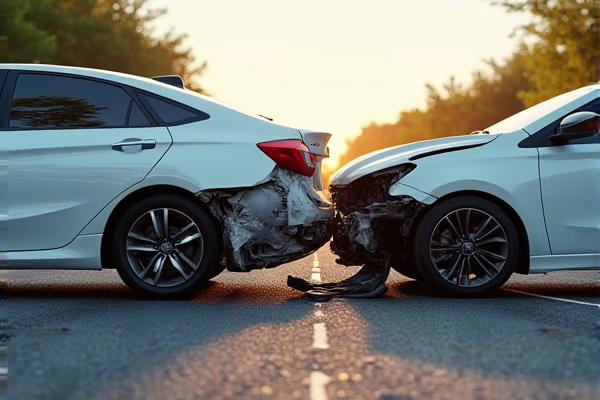
Document everything. This includes taking photos of the damage to your motorcycle, the other vehicle, and the accident scene. Obtain a copy of the police report, and gather the contact information of any witnesses. Most importantly, seek medical attention immediately, even if you don’t feel seriously injured. Some injuries, like internal bleeding or concussions, may not be immediately apparent.
Notify your insurance company of the accident as soon as possible, but be careful about what you say. Stick to the facts and avoid speculating about fault. Your insurance company has a duty to investigate the claim, but they are also looking out for their own interests. It’s best to consult with an attorney before providing a recorded statement.
Finally, do not attempt to negotiate with the uninsured driver directly. They likely don’t have the financial resources to cover your damages, and any settlement you reach may not be enforceable. Let an attorney handle the negotiations on your behalf.
How does Uninsured Motorist coverage work in California?
UM coverage is typically written in increments of $10,000/$20,000/$30,000, meaning $10,000 per person for bodily injury, $20,000 per accident for bodily injury, and $30,000 for property damage. Your policy may have higher limits, depending on your selections. It’s important to review your policy to understand the extent of your coverage.
If your damages exceed your UM policy limits, you may be able to pursue a lawsuit against the uninsured driver personally. However, this can be challenging if the driver has limited assets. An attorney can help you assess the driver’s financial situation and determine if a lawsuit is worthwhile.
What if the uninsured driver has some assets?
Even if the uninsured driver has limited assets, it may still be possible to recover some compensation through a lawsuit. An attorney can investigate the driver’s finances and identify any potential sources of recovery, such as savings accounts, real estate, or other valuable assets. We can also explore the possibility of wage garnishment or other collection methods.
Can I sue the uninsured driver’s family members?
Generally, you cannot sue the uninsured driver’s family members unless they were directly involved in the accident or contributed to the driver’s negligence. For example, if the driver was operating a vehicle borrowed from a family member, you may be able to sue the vehicle owner under the theory of negligent entrustment. However, this requires proving that the owner knew or should have known that the driver was unfit to operate the vehicle.
What is subrogation, and how does it affect my claim?
Subrogation is the process by which your insurance company seeks to recover the money they paid out on your claim from the at-fault party. If your insurance company pays you under your UM coverage, they will likely pursue a claim against the uninsured driver to recoup their losses. This doesn’t necessarily affect your recovery, but it’s important to be aware of this process. Civ. Code § 3040 limits the amount a health insurance company or medical provider can claim from your settlement via a lien.
What if the uninsured driver was driving a borrowed vehicle?
If the uninsured driver was operating a vehicle borrowed from a friend or family member, you may be able to pursue a claim against the vehicle owner under the theory of negligent entrustment. This requires proving that the owner knew or should have known that the driver was unfit to operate the vehicle. CACI No. 724 outlines the elements of a negligent entrustment claim.
What if the accident involved a government vehicle?
If a motorcycle accident involves a government-owned vehicle, the process for pursuing a claim is different. You must file a formal administrative claim with the government agency within a strict timeframe. Gov. Code § 911.2 requires a claim be presented within **6 months** (180 days). Failure to meet this deadline can result in the permanent loss of your right to recover.
What if the uninsured driver fled the scene?
If the uninsured driver fled the scene of the accident, it’s crucial to report the incident to the police immediately. The police will investigate the accident and attempt to locate the driver. Even if the driver is never found, you may still be able to recover compensation through your own UM coverage.
What if the accident was caused by a hit-and-run driver?
Hit-and-run accidents are particularly challenging, but you may still have options for recovery. Your UM coverage can provide compensation even if the driver is never identified. Additionally, you may be eligible for financial assistance from a state fund designed to help victims of hit-and-run accidents.
What if I have questions about my insurance policy?
Insurance policies can be complex and difficult to understand. If you have questions about your coverage, it’s best to consult with an attorney who can review your policy and explain your rights and options. I have extensive experience dealing with insurance companies and can help you navigate the claims process.