Can Helmet Laws Influence Jury Perception?

As a personal injury attorney specializing in motorcycle accidents, I often encounter situations like Darnell’s. One of the first questions I receive from injured riders – and their families – is whether wearing a helmet will negatively impact their case. The short answer is: it’s complicated. California is a universal helmet law state, meaning all riders are legally required to wear a DOT-approved helmet. However, the defense will often attempt to use helmet non-compliance to diminish your damages, even if it wasn’t a factor in the severity of your injuries.
The reality is that the defense strategy isn’t about whether you *should* have been wearing a helmet; it’s about creating doubt in the jurors’ minds. They’ll argue that your injuries would have been less severe *had* you been wearing a helmet, and attempt to reduce the compensation you receive accordingly. This is a tactic rooted in comparative fault, and it’s crucial to understand how it works and how to combat it.
I’ve been practicing personal injury law in San Diego for over 13 years, and I was fortunate early in my career to train with a former insurance defense attorney. This experience gave me intimate knowledge of how insurance companies evaluate, devalue, and deny claims. I understand their playbook, and I’m adept at anticipating their strategies and building a strong defense against them. Knowing how they think is half the battle.
Will Wearing a Helmet Automatically Reduce My Claim?
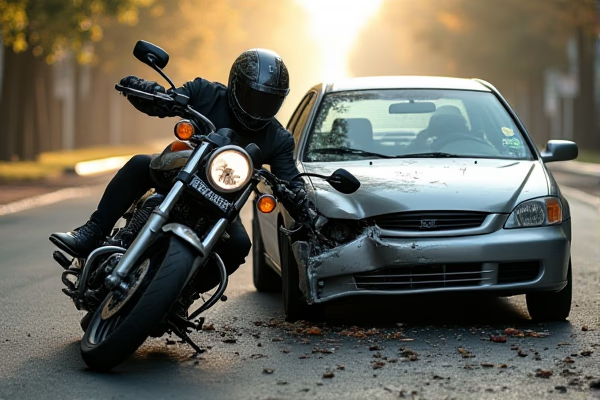
No, not automatically. California is a pure comparative fault state, meaning you can recover damages even if you were partially at fault for the accident. However, the defense will likely argue that your failure to wear a helmet contributed to the severity of your head injuries. They’ll present medical testimony and accident reconstruction evidence to support this claim. The jury will then determine your percentage of fault, and your compensation will be reduced accordingly. It’s important to remember that the defense has the burden of proving your negligence contributed to your injuries.
The key is to demonstrate that the driver’s negligence was the primary cause of the accident and your injuries. We achieve this through thorough investigation, gathering police reports, witness statements, and expert testimony. We’ll also focus on the extent of your other injuries – those *not* related to your head – to show the overall impact of the accident on your life.
What Evidence Do Insurance Companies Look For Regarding Helmet Use?
Insurance adjusters and defense attorneys will scrutinize every detail of the accident, including any evidence related to helmet use. This includes photos of the accident scene, witness statements, and your own statements to the police or medical personnel. They’ll also examine your medical records for any pre-existing conditions that might have contributed to your injuries. They will also look for any evidence that you were operating the motorcycle recklessly or in violation of traffic laws.
Crucially, they’ll attempt to establish a causal link between your failure to wear a helmet and the severity of your head injuries. This often involves hiring medical experts to testify about the protective benefits of helmets and the potential for reduced injuries with their use. It’s vital to have your own medical experts prepared to counter this testimony and demonstrate that the driver’s negligence was the primary cause of your injuries.
How Does California’s Helmet Law Affect Lane Splitting Accidents?
California law formally recognizes lane splitting as legal, defined as driving a motorcycle between rows of stopped or moving vehicles in the same lane. In accident litigation, proving that the maneuver was performed ‘in a safe and prudent manner’ is essential to rebutting claims of rider negligence. Defense attorneys often attempt to portray lane splitting as inherently dangerous and argue that it contributed to the accident. However, CVC § 21658.1 explicitly allows for this practice, and riders are not automatically at fault simply for engaging in it.
We’ll focus on demonstrating that you were operating your motorcycle safely and responsibly, adhering to all traffic laws and exercising reasonable care. This may involve presenting witness testimony, dashcam footage, or expert analysis of the accident scene. The goal is to establish that the driver’s negligence – such as speeding, distracted driving, or failing to yield – was the primary cause of the accident, regardless of whether you were lane splitting.
What If the Driver Was Under the Influence?
If the driver was under the influence of alcohol or drugs, it significantly strengthens your case. CVC § 23152(a) makes it unlawful to operate a vehicle while impaired, and proving intoxication opens the door to punitive damages. Punitive damages are designed to punish the defendant for their reckless behavior and deter others from similar conduct. They can substantially increase the total compensation you receive.
In DUI cases, the prosecution typically gathers evidence such as blood alcohol content (BAC) levels, field sobriety test results, and witness testimony. We’ll work closely with the prosecution to obtain this evidence and use it to build a strong case against the driver. The fact that the driver was under the influence demonstrates a blatant disregard for the safety of others, which is a powerful argument in favor of awarding punitive damages.
What Should I Do Immediately After a Motorcycle Accident?
The immediate aftermath of a motorcycle accident is critical. First and foremost, seek medical attention, even if you don’t feel seriously injured. Some injuries may not be immediately apparent. Next, contact the police and file a report. Obtain the other driver’s information, including their name, address, insurance details, and driver’s license number. If possible, gather witness contact information and take photos of the accident scene, including vehicle damage, road conditions, and any visible injuries. Finally, **do not** give any statements to the insurance company without first consulting with an attorney.
Insurance companies are skilled at minimizing payouts, and they’ll often attempt to record your statement early in the process. Anything you say can be used against you later, so it’s best to let an attorney handle all communications with the insurance company. We’ll protect your rights and ensure that you receive the full compensation you deserve.
How Long Do I Have to File a Lawsuit?
California law provides a **two-year** window from the date of the motorcycle accident to file a lawsuit for personal injury. Because evidence at a crash scene—such as skid marks or GoPro footage—can disappear quickly, immediate filing is critical to preserve the integrity of the claim. CCP § 335.1 outlines these deadlines, and failing to meet them can result in the permanent loss of your right to recover.
It’s important to act quickly and consult with an attorney as soon as possible after the accident. We’ll investigate the accident, gather evidence, and file a lawsuit within the statutory timeframe to protect your rights.
What if the Accident Involved a Government Vehicle or Road Hazard?
If a motorcycle accident involves a government-owned vehicle or a dangerous road condition like loose gravel, potholes, or poorly marked construction zones, a formal administrative claim **MUST** be presented within **6 months** (180 days). Failure to meet this strict deadline under the Government Tort Claims Act can result in the permanent loss of your right to recover. Gov. Code § 911.2 governs these claims, and the process can be complex and time-sensitive.
We have extensive experience handling claims against government entities and will ensure that all necessary paperwork is filed correctly and within the required timeframe. Don’t delay – these deadlines are unforgiving.
What is the Role of a Recorded Statement in My Case?
Insurance companies often request a recorded statement from injured parties early in the claims process. While you are not legally obligated to provide one, they’ll often present it as a standard part of their investigation. However, I strongly advise against giving a recorded statement without first consulting with an attorney. Insurance adjusters are trained to ask leading questions and elicit information that can be used to devalue your claim.
They may attempt to downplay the severity of your injuries, challenge your credibility, or obtain admissions that contradict your later testimony. Let me handle all communications with the insurance company, including any requests for a recorded statement. I’ll protect your rights and ensure that you don’t inadvertently jeopardize your case.
How Do Medical Liens Affect My Settlement?
If you received medical treatment for your injuries, the healthcare providers may place a lien on your settlement to recover their costs. These liens can significantly reduce the amount of money you ultimately receive. California law limits the amount a health insurance company or medical provider can claim from your settlement via a lien. These ‘anti-subrogation’ protections ensure that the injured rider retains a fair portion of their recovery after medical bills are addressed. Civ. Code § 3040 provides these protections.
We’ll negotiate with the healthcare providers to reduce the liens to a reasonable amount and ensure that you’re not unfairly burdened by medical expenses. We’ll also explore all available options for reducing your medical bills, such as Medicare or Medicaid.
What if I Was Partially at Fault for the Accident?
California’s ‘pure’ comparative fault system applies to motorcycle claims. Even if a driver argues you shared responsibility due to speed or positioning, you can still recover damages; however, your total compensation will be reduced by your percentage of fault. Civ. Code § 1714 outlines the rules for determining comparative fault.
The key is to accurately assess your level of fault and present evidence to minimize your responsibility. We’ll thoroughly investigate the accident, gather witness statements, and expert testimony to demonstrate that the driver’s negligence was the primary cause of the collision. Even if you were partially at fault, you may still be entitled to significant compensation.