Can Private Property Owners Be Liable For Unsafe Driving Areas?

The question of whether a private property owner is liable for injuries sustained on their land due to unsafe driving conditions is a complex one, deeply rooted in California premises liability law. Generally, landowners have a duty to maintain their property in a reasonably safe condition for those who are invited onto the land, or even those who are foreseeable visitors. However, this duty isn’t absolute, and the extent of that duty depends heavily on the specific circumstances.
A key factor is the status of the person injured. An invitee—someone explicitly or implicitly invited onto the property—is owed the highest level of care. A licensee—someone permitted on the property but not necessarily invited—is owed a lesser duty. Trespassers are generally owed the lowest level of care, though even in those cases, landowners cannot intentionally harm them. In Javier’s case, as he was simply traveling on a road that happened to be on private property, his status would be a critical point of contention.
I’ve spent over 13 years practicing personal injury law here in San Diego, and I’ve seen countless cases hinge on these nuanced distinctions. What makes these cases particularly challenging is that insurance companies are adept at minimizing landowner liability. They’ll often argue that the driver was solely responsible, or that the condition wasn’t reasonably foreseeable. Having been trained by a former insurance defense attorney, I have intimate knowledge of how these companies evaluate, devalue, and deny claims, and I can anticipate their strategies.
What constitutes “reasonable care” when it comes to maintaining a driving surface on private property?

Determining “reasonable care” is fact-specific, but generally involves inspecting the property for hazards and taking steps to remedy them or warn visitors. This could include regularly grading roads, filling potholes, posting warning signs, or even temporarily closing access during hazardous conditions. The frequency of inspections and the types of warnings required will depend on the nature of the property and the foreseeable risks. For example, a ranch actively used for cattle drives will have a higher duty of care than a remote, infrequently visited parcel of land.
The presence of prior incidents is also crucial. If the ranch owner was previously aware of issues with the gravel road—perhaps other drivers had lost control—they had a duty to take corrective action. Evidence of prior complaints, maintenance records, or even internal communications can be vital in establishing negligence.
What if the property owner didn’t know about the hazard?
Lack of knowledge doesn’t automatically absolve a landowner of liability. California law imposes a duty to inspect the property for reasonably foreseeable hazards. If a reasonable inspection would have revealed the gravel road condition, the owner could still be held liable, even if they weren’t personally aware of the problem. This is where the concept of “constructive notice” comes into play—meaning they *should* have known about the hazard.
How does California’s lane splitting law affect liability in these cases?
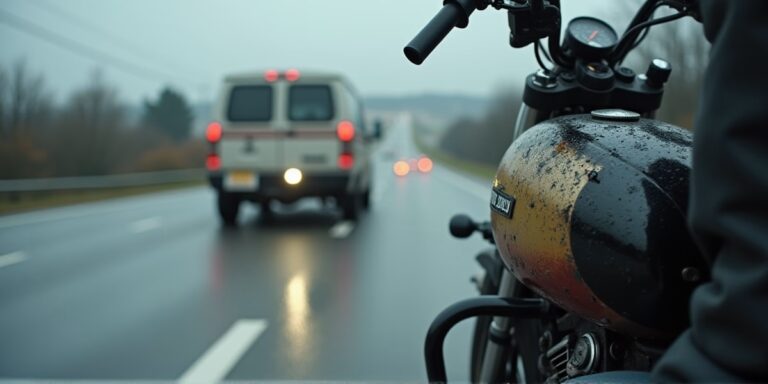
California is unique in that it legally recognizes lane splitting. However, even if Javier was lane splitting when the accident occurred, it doesn’t automatically mean he was at fault. The law requires riders to perform lane splitting maneuvers in a “safe and prudent manner.” If the gravel road condition made lane splitting inherently dangerous, the ranch owner could still be held liable for failing to warn visitors of the hazard. Proving that the maneuver was reasonable under the circumstances is essential, and often requires expert testimony.
What evidence is important to gather if I’ve been injured on private property?
Documenting the scene is paramount. Take photos and videos of the hazard, the surrounding area, and any warning signs (or lack thereof). Obtain the names and contact information of any witnesses. If possible, secure any maintenance records or communications related to the property. Most importantly, seek medical attention immediately and keep detailed records of your treatment and expenses. A police report, even if not formally filed, can also be helpful.
What is the statute of limitations for filing a claim against a property owner in California?
California law provides a **two-year** window from the date of the motorcycle accident to file a lawsuit for personal injury. Because evidence at a crash scene—such as skid marks or GoPro footage—can disappear quickly, immediate filing is critical to preserve the integrity of the claim. CCP § 335.1
What if the accident involved a government-owned vehicle or roadway?
If a motorcycle accident involves a government-owned vehicle or a dangerous road condition like loose gravel, potholes, or poorly marked construction zones, a formal administrative claim **MUST** be presented within **6 months** (180 days). Failure to meet this strict deadline under the Government Tort Claims Act can result in the permanent loss of your right to recover. Gov. Code § 911.2
What should I do if the insurance company asks me to give a recorded statement?
Insurance companies routinely request recorded statements after an accident. While you are not legally obligated to provide one, they are designed to gather information that can be used to minimize their liability. It’s generally best to decline the request and consult with an attorney before speaking to the insurer. They are experts at eliciting statements that can be used against you later.
What happens if I have medical liens that need to be resolved?
Medical liens arise when a healthcare provider treats you for injuries sustained in an accident and seeks reimbursement from your settlement. California law limits the amount a health insurance company or medical provider can claim from your settlement via a lien. These ‘anti-subrogation’ protections ensure that the injured rider retains a fair portion of their recovery after medical bills are addressed. Civ. Code § 3040
What is comparative fault, and how could it affect my claim?
California’s ‘pure’ comparative fault system applies to motorcycle claims. Even if a driver argues you shared responsibility due to speed or positioning, you can still recover damages; however, your total compensation will be reduced by your percentage of fault. Civ. Code § 1714
What if the at-fault driver was operating a borrowed vehicle?
A vehicle owner is liable if they permit an unfit or incompetent driver to operate their car, leading to a collision with a motorcyclist. This is a vital tool for recovery when the at-fault driver was operating a vehicle borrowed from a friend or family member. CACI No. 724