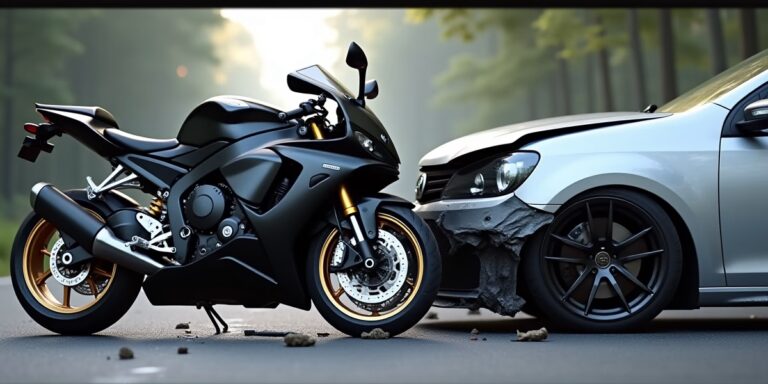
How Is Speed Determined After A Motorcycle Accident?

Determining speed after a motorcycle accident is rarely straightforward. Unlike cars, motorcycles don’t always have readily accessible “black boxes” recording speed data. Insurance companies often rely on circumstantial evidence and reconstruction techniques, which can be biased or inaccurate. As a personal injury attorney practicing in San Diego for over 13 years, I’ve seen firsthand how these tactics are used to devalue legitimate claims. I was trained by former insurance defense attorneys, giving me intimate knowledge of how they evaluate, devalue, and deny claims.
The initial police report is a crucial starting point, but it’s not definitive. Officers may estimate speed based on skid mark length, vehicle damage, and witness statements. However, these methods are prone to error, especially if the officer lacks specialized training in motorcycle accident investigation. It’s important to remember that the police report is simply a record of observations, not a conclusive finding of fault or speed.
How Accurate Are Skid Mark Measurements in Motorcycle Accidents?

Skid mark analysis is a common technique, but its reliability is often overstated. Several factors can affect skid mark length, including road surface conditions, tire condition, brake efficiency, and the angle of the motorcycle at the time of braking. A wet or gravelly road will produce shorter skid marks than dry pavement. Similarly, worn tires or a malfunctioning brake system will reduce the accuracy of the measurement. Furthermore, motorcycles often don’t leave consistent skid marks like cars do, making accurate assessment difficult.
Even with ideal conditions, calculating speed from skid marks requires specialized formulas and expertise. Insurance companies often employ reconstruction experts who may use these formulas to arrive at a speed estimate favorable to their client. It’s essential to have your own independent expert review the data and challenge any conclusions that seem questionable.
Can Vehicle Damage Be Used to Estimate Speed?
The extent of vehicle damage can provide clues about the force of the impact and, indirectly, the speed of the vehicles involved. However, damage assessment is subjective and depends on numerous variables, including the type of vehicles, the angle of impact, and the materials involved. A seemingly minor dent could indicate a high-speed collision if the impact occurred at a vulnerable point on the motorcycle.
Insurance adjusters may use “crashworthiness” data – information about how vehicles deform at different speeds – to estimate impact velocity. Again, this data is not foolproof and can be influenced by factors such as the age and condition of the vehicles. A thorough investigation by a qualified accident reconstructionist is crucial to accurately assess the damage and determine its relationship to speed.
What Role Do Witnesses Play in Determining Speed?
Witness statements can be valuable, but they are often unreliable. Human perception of speed is notoriously inaccurate, and witnesses may overestimate or underestimate the speed of a motorcycle due to factors such as distance, lighting conditions, and their own biases. It’s important to interview witnesses as soon as possible after the accident, while their memories are still fresh. However, even reliable witnesses can be mistaken, and their testimony should be corroborated with other evidence whenever possible.
Furthermore, witnesses may not have a clear vantage point or may be unfamiliar with motorcycle dynamics. A witness might perceive a motorcycle as traveling faster simply because it’s accelerating or maneuvering through traffic. It’s crucial to carefully evaluate the credibility and perspective of each witness before relying on their testimony.
How Can I Protect My Claim If the Insurance Company Questions My Speed?
If the insurance company alleges you were speeding, it’s essential to take immediate action to protect your claim. First, document everything. Preserve any evidence related to the accident, including photos of the scene, witness contact information, and your own recollection of events. Second, consult with an experienced attorney as soon as possible. An attorney can investigate the accident, gather evidence, and challenge any inaccurate or biased claims made by the insurance company.
Third, be cautious about making statements to the insurance adjuster. Anything you say can be used against you, so it’s best to let your attorney handle all communications with the insurer. Finally, consider hiring an independent accident reconstructionist to analyze the evidence and provide an unbiased assessment of the speed of the vehicles involved. This expert testimony can be invaluable in proving your case and maximizing your recovery.
What if There is Dashcam Footage Available?
Dashcam footage, if available, can be a game-changer in determining speed. However, it’s important to understand the limitations of dashcam technology. The footage may not capture the entire accident scene, and the camera angle can distort the perception of speed. Furthermore, the footage may be subject to manipulation or alteration. An attorney can help you obtain and analyze the dashcam footage, and ensure that it’s properly authenticated and presented as evidence.
Modern motorcycles are increasingly equipped with onboard cameras and data recorders. This data can provide valuable insights into speed, braking patterns, and other critical factors. It’s essential to preserve this data as soon as possible, as it can be overwritten or lost if the motorcycle is damaged or repaired. In San Diego, we often see cases where this data is critical to establishing the facts.
What is the Role of the “Event Data Recorder” (EDR) in Motorcycle Accidents?
While not as common as in cars, some newer motorcycles are equipped with Event Data Recorders (EDRs). These devices record data such as speed, braking, throttle position, and lean angle in the moments leading up to a crash. This data can be invaluable in reconstructing the accident and determining the cause of the collision. However, accessing EDR data requires specialized tools and expertise. An attorney can help you obtain and analyze this data, and ensure that it’s properly presented as evidence.
It’s important to note that EDR data is not always admissible in court. The defense may challenge the accuracy or reliability of the data, arguing that it was tampered with or that the device was not properly maintained. An experienced attorney can anticipate these challenges and prepare a strong case to ensure that the EDR data is admitted as evidence.
As a personal injury attorney in San Diego with over 13 years of experience, I understand the complexities of motorcycle accident claims. Trained by a former insurance defense attorney, I have intimate knowledge of how insurance companies evaluate, devalue, and deny claims. If you’ve been injured in a motorcycle accident, don’t hesitate to contact my office for a free consultation. I can help you protect your rights and maximize your recovery.
What Should I Do If the Police Report Indicates I Was Speeding?
A police report indicating you were speeding doesn’t automatically mean your claim is denied. It’s just one piece of evidence, and it’s often subject to interpretation. An experienced attorney can review the report, identify any errors or inconsistencies, and challenge the officer’s conclusions. They can also gather additional evidence to support your case, such as witness statements, dashcam footage, and accident reconstruction analysis.
Furthermore, the police officer’s estimate of your speed may be based on flawed methodology or inaccurate assumptions. It’s important to remember that officers are not always trained in motorcycle accident investigation, and their estimates may be unreliable. An attorney can help you expose these weaknesses and present a compelling case to the insurance company.
What if the Other Driver Claims I Was Lane Splitting and Traveling Too Fast?
Lane splitting is legal in California, but it’s often a point of contention in accident claims. Insurance companies may argue that you were traveling too fast for conditions while lane splitting, and that your negligence contributed to the collision. However, California law recognizes lane splitting as a legitimate riding maneuver, and you are not automatically at fault simply because you were lane splitting.
To successfully defend against this claim, you’ll need to prove that you were lane splitting in a safe and prudent manner. This may involve presenting evidence of your experience, training, and the road conditions at the time of the accident. An attorney can help you gather this evidence and present a compelling case to the insurance company. Remember, CVC § 21658.1 defines lane splitting as legal.
How Long Do I Have to File a Lawsuit After a Motorcycle Accident?
In California, you have a limited amount of time to file a lawsuit after a motorcycle accident. The statute of limitations for personal injury claims is generally **two years** from the date of the accident. If you fail to file a lawsuit within this timeframe, you may lose your right to recover damages. Because evidence at a crash scene—such as skid marks or GoPro footage—can disappear quickly, immediate filing is critical to preserve the integrity of the claim. CCP § 335.1 outlines these time constraints.
It’s important to consult with an attorney as soon as possible after the accident to ensure that you meet all applicable deadlines. An attorney can investigate the accident, gather evidence, and file a lawsuit on your behalf before the statute of limitations expires.
What if the At-Fault Driver Was Uninsured or Underinsured?
If the at-fault driver was uninsured or underinsured, you may be able to recover damages from your own insurance policy under the Uninsured Motorist (UM) or Underinsured Motorist (UIM) coverage. This coverage protects you in the event that the other driver doesn’t have enough insurance to cover your medical bills, lost wages, and other damages.
However, pursuing a UM/UIM claim can be complex. The insurance company may dispute the extent of your damages or argue that you were partially at fault for the accident. An attorney can help you navigate the UM/UIM process and ensure that you receive the full compensation you deserve. Ins. Code § 11580.2 details these coverage options.
What if the Accident Involved a Government Vehicle or Road Hazard?
If your motorcycle accident involved a government-owned vehicle or a dangerous road condition like loose gravel, potholes, or poorly marked construction zones, a formal administrative claim **MUST** be presented within **6 months** (180 days). Failure to meet this strict deadline under the Government Tort Claims Act can result in the permanent loss of your right to recover. Gov. Code § 911.2 governs these claims.
The administrative claim process can be complex and time-consuming. It’s essential to consult with an attorney as soon as possible to ensure that you meet all applicable deadlines and requirements. An attorney can help you prepare and file the claim, and represent you throughout the administrative process.