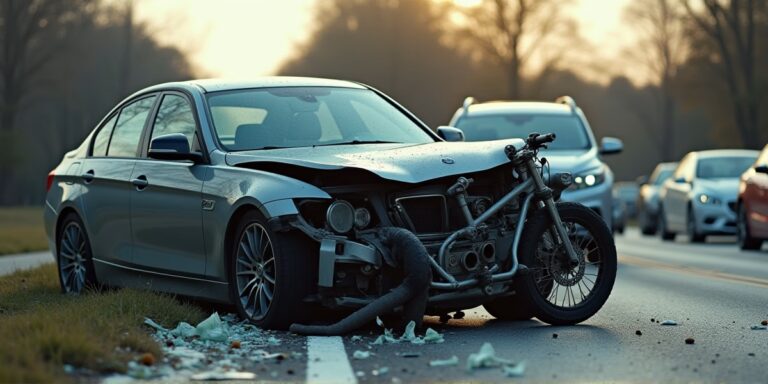
What Happens If Multiple Drivers Were Involved In My Motorcycle Crash?

When multiple parties contribute to a motorcycle accident, determining liability becomes significantly more complex. California law allows for the possibility of shared fault, meaning each driver involved could be held responsible for a portion of the damages. This is known as comparative negligence, and it can dramatically impact the amount of compensation you ultimately recover. The key is establishing each driver’s degree of responsibility, which requires a thorough investigation and a deep understanding of California vehicle codes and insurance policies.
The process begins with gathering evidence. This includes police reports, witness statements, photos of the scene, and any available video footage. We also look for any contributing factors, such as distracted driving, speeding, or mechanical failures. In Javier’s case, we discovered the pickup truck driver was texting at the time of the collision, and the sedan driver was traveling slightly above the speed limit. Both actions contributed to the severity of his injuries and the resulting financial burden.
I’ve been practicing personal injury law in San Diego for over 13 years, and I’ve seen countless cases involving multiple at-fault drivers. I was trained by a former insurance defense attorney, giving me intimate knowledge of how insurance companies evaluate, devalue, and deny claims. This experience allows me to anticipate their tactics and build a strong case on your behalf, ensuring you receive the maximum compensation you deserve.
How is Fault Determined in a Multi-Vehicle Motorcycle Accident?

Determining fault in a multi-vehicle motorcycle accident involves a careful analysis of several factors. California operates under a pure comparative fault system, meaning you can recover damages even if you were partially at fault. However, your recovery will be reduced by your percentage of fault. Investigators will examine the actions of each driver leading up to the crash, including speed, lane positioning, signaling, and adherence to traffic laws. Evidence like police reports, witness testimony, and accident reconstruction analysis are crucial.
In cases where fault isn’t clear-cut, it may be necessary to hire an accident reconstruction expert to analyze the dynamics of the collision. These experts can provide valuable insights into the sequence of events and help establish the cause of the accident. It’s important to remember that insurance companies will often attempt to minimize their liability, so having an independent investigation is essential.
What Role Do Insurance Policies Play When Multiple Drivers Are Involved?
When multiple drivers are involved, several insurance policies may come into play. The at-fault driver’s insurance policy is the primary source of recovery, but you may also be able to pursue claims against your own insurance policy, particularly if you have Uninsured Motorist (UM) or Underinsured Motorist (UIM) coverage. Ins. Code § 11580.2 outlines the requirements for these types of coverage in California. It’s crucial to understand the limits of each policy and how they interact with one another.
Navigating these complexities can be challenging, which is why it’s essential to have an attorney on your side who understands the intricacies of insurance law. We will thoroughly review all applicable policies and identify all potential sources of recovery.
Can I Sue All Drivers Involved in the Accident?
Yes, you can sue all drivers whose negligence contributed to your motorcycle accident. However, it’s often more efficient to pursue a single lawsuit against all parties. This simplifies the discovery process and avoids the risk of conflicting verdicts. Your attorney will assess the liability of each driver and determine the best course of action. It’s important to note that California’s statute of limitations—CCP § 335.1—provides a **two-year** window from the date of the motorcycle accident to file a lawsuit for personal injury. Because evidence at a crash scene—such as skid marks or GoPro footage—can disappear quickly, immediate filing is critical to preserve the integrity of the claim.
What if One Driver is Uninsured or Underinsured?
If one of the drivers involved is uninsured or underinsured, you may be able to pursue a claim against your own insurance policy’s Uninsured Motorist (UM) or Underinsured Motorist (UIM) coverage. These policies are designed to protect you in situations where the at-fault driver doesn’t have adequate insurance to cover your damages. However, the limits of your UM/UIM coverage may be lower than the full extent of your losses. In such cases, it may be necessary to explore other avenues of recovery, such as a lawsuit against the uninsured driver’s assets.
How Does Comparative Negligence Affect My Settlement?
California’s ‘pure’ comparative fault system applies to motorcycle claims. Civ. Code § 1714 states that even if a driver argues you shared responsibility due to speed or positioning, you can still recover damages; however, your total compensation will be reduced by your percentage of fault. For example, if you are found to be 20% at fault, your settlement will be reduced by 20%. It’s crucial to have an attorney who can effectively argue your case and minimize your percentage of fault.
What if a Government Vehicle Was Involved in the Accident?
If a motorcycle accident involves a government-owned vehicle or a dangerous road condition like loose gravel, potholes, or poorly marked construction zones, a formal administrative claim Gov. Code § 911.2 **MUST** be presented within **6 months** (180 days). Failure to meet this strict deadline under the Government Tort Claims Act can result in the permanent loss of your right to recover.
What Should I Do If the Insurance Company Asks Me to Give a Recorded Statement?
Insurance companies often request recorded statements from accident victims. Do not give a recorded statement without first consulting with an attorney. Insurance adjusters are trained to ask leading questions designed to minimize their liability. They may attempt to trick you into admitting fault or downplaying your injuries. An attorney can advise you on whether to give a statement and, if so, how to answer questions in a way that protects your rights.
What Happens If I Have Medical Liens After My Accident?
After a motorcycle accident, you may incur significant medical bills. These bills often result in medical liens, which are claims against your settlement proceeds. It’s important to understand your rights regarding medical liens and negotiate with healthcare providers to reduce the amount owed. California law limits the amount a health insurance company or medical provider can claim from your settlement via a lien. Civ. Code § 3040 protects the injured rider and ensures that they retain a fair portion of their recovery after medical bills are addressed.
What if the Other Driver Claims I Was Speeding?
If the other driver claims you were speeding, it’s crucial to gather evidence to refute their allegations. This may include witness statements, dashcam footage, or accident reconstruction analysis. It’s also important to review the police report for any evidence of speeding. Insurance companies often use speed as a tactic to reduce your settlement, so having an attorney who can challenge their claims is essential.
What if I Didn’t Wear a Helmet?
California is a universal helmet law state, requiring all riders and passengers to wear a safety helmet that meets DOT standards. CVC § 27803 states this requirement. While a violation may be used by defense counsel to argue for a reduction in damages via comparative fault—specifically regarding head or neck injuries—it does not bar a rider from seeking recovery for other injuries caused by a negligent driver.