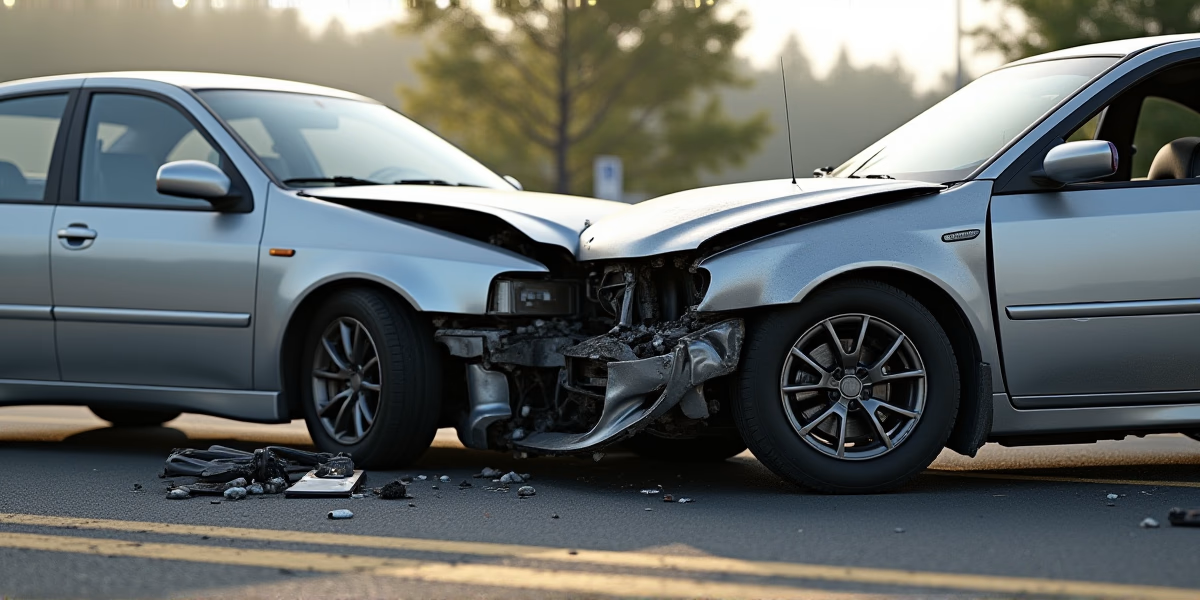
How Important Is Accident Reconstruction In Motorcycle Cases?

Accident reconstruction is often critical in motorcycle cases, and it’s not just about determining who was at fault. It’s about proving the extent of the other party’s negligence and maximizing your recovery. Unlike car accidents, motorcycle crashes frequently involve disputes over visibility, rider positioning, and the physics of the impact. Insurance companies are adept at exploiting these ambiguities to minimize payouts.
The core of accident reconstruction lies in applying scientific principles—physics, engineering, and biomechanics—to analyze the evidence and recreate the events leading up to the collision. This process can involve a detailed examination of the crash scene, vehicle damage, police reports, witness statements, and even the motorcycle’s event data recorder (EDR) if equipped. A skilled reconstructionist can often uncover crucial details that would otherwise be missed.
I’ve been practicing personal injury law in San Diego for over 13 years, and I’ve seen firsthand how a well-executed accident reconstruction can dramatically alter the outcome of a case. I was trained by a former insurance defense attorney, giving me intimate knowledge of how insurance companies evaluate, devalue, and deny claims. This insight allows me to anticipate their tactics and build a stronger case for my clients.
How does an accident reconstructionist determine fault in a motorcycle accident?
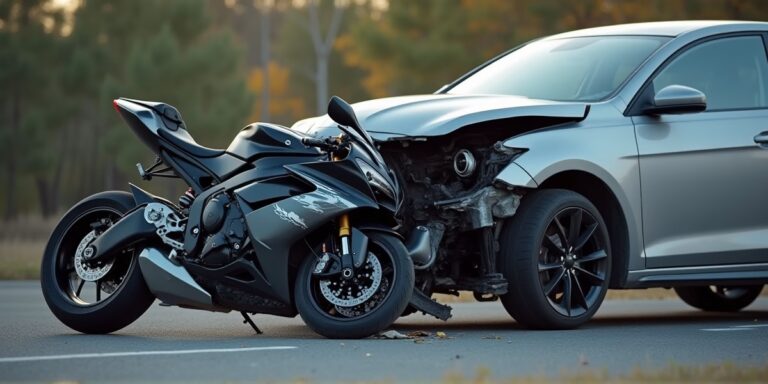
An accident reconstructionist uses a variety of methods to determine fault, starting with a thorough site inspection. They’ll look for skid marks, gouge marks, and debris fields to establish the vehicles’ paths and speeds. They’ll also analyze the point of impact, vehicle crush damage, and the final resting positions of the motorcycles and other vehicles involved. This data is then used to create a detailed diagram or animation of the crash sequence.
Crucially, reconstructionists don’t rely solely on physical evidence. They’ll also review police reports, witness statements, and any available video footage—dashcam recordings, traffic cameras, or surveillance systems. They may even use specialized software to simulate the crash and test different scenarios. In motorcycle cases, they’ll pay close attention to factors like lane splitting, rider visibility, and the other driver’s actions leading up to the collision.
What types of evidence are used in motorcycle accident reconstruction?
The evidence used in motorcycle accident reconstruction is diverse and can include:
- Police Reports: Official documentation of the accident, including officer observations, witness statements, and preliminary findings.
- Vehicle Damage: The extent and location of damage to both motorcycles and other vehicles.
- Crash Scene Photos and Videos: Visual documentation of the accident site, vehicle positions, and surrounding environment.
- Witness Statements: Accounts from individuals who observed the accident.
- Event Data Recorder (EDR) Data: Information from the motorcycle’s onboard computer, including speed, braking, and acceleration.
- Motorcycle Maintenance Records: Documentation of the motorcycle’s condition and any recent repairs.
Can accident reconstruction be used to challenge the police report?
Absolutely. Police reports are often based on preliminary information and may contain inaccuracies or omissions. An accident reconstructionist can identify discrepancies between the report and the physical evidence, potentially challenging the officer’s conclusions. For example, the report might incorrectly state the speed of a vehicle or misidentify the point of impact.
Furthermore, police officers are not always trained in accident reconstruction techniques. A reconstructionist’s expertise can provide a more thorough and objective analysis of the crash, leading to a more accurate determination of fault. In San Diego, we frequently encounter cases where the police report is incomplete or biased, making reconstruction essential.
What role does lane splitting play in accident reconstruction?
Lane splitting adds a layer of complexity to motorcycle accident reconstruction. California law formally recognizes lane splitting as legal, defined as driving a motorcycle between rows of stopped or moving vehicles in the same lane. However, it’s not a free pass. To be considered legal, the maneuver must be performed “in a safe and prudent manner.”
An accident reconstructionist will examine whether the rider’s lane splitting was reasonable and safe, considering factors like speed, traffic conditions, and the other vehicles’ movements. They’ll also assess whether the other driver acted negligently by failing to provide adequate space or changing lanes without checking their blind spots. Proving that the lane splitting was performed safely is essential to rebutting claims of rider negligence.
What if the other driver claims I was speeding?
Speed is a common point of contention in motorcycle accidents. If the other driver alleges you were speeding, an accident reconstructionist can use several methods to determine your actual speed at the time of the collision. This includes analyzing skid marks, vehicle damage, and the motorcycle’s EDR data. They can also use the “crush depth” of the vehicles to estimate impact speeds.
It’s important to remember that even if you were slightly over the speed limit, it doesn’t automatically mean you were at fault. The reconstructionist will consider whether your speed was a contributing factor to the accident and whether the other driver’s negligence was the primary cause. Civ. Code § 1714, California’s ‘pure’ comparative fault system applies, meaning you can still recover damages even if you shared some responsibility.
What should I do if I’m involved in a motorcycle accident and suspect the other driver will dispute fault?
If you’ve been involved in a motorcycle accident and believe the other driver may dispute fault, it’s crucial to take immediate action. First, ensure your safety and seek medical attention. Then, document the scene as thoroughly as possible—take photos and videos, collect witness information, and obtain a copy of the police report.
Most importantly, contact an experienced attorney as soon as possible. I can help you gather evidence, hire a qualified accident reconstructionist, and build a strong case to protect your rights. Don’t wait—evidence can disappear quickly, and insurance companies will often try to take advantage of an unrepresented claimant.
How long do I have to file a lawsuit after a motorcycle accident in California?
California law provides a **two-year** window from the date of the motorcycle accident to file a lawsuit for personal injury. Because evidence at a crash scene—such as skid marks or GoPro footage—can disappear quickly, immediate filing is critical to preserve the integrity of the claim. CCP § 335.1 outlines these deadlines.
What if the accident involved a government vehicle or a hazardous road condition?
If a motorcycle accident involves a government-owned vehicle or a dangerous road condition like loose gravel, potholes, or poorly marked construction zones, a formal administrative claim **MUST** be presented within **6 months** (180 days). Failure to meet this strict deadline under the Government Tort Claims Act can result in the permanent loss of your right to recover. Gov. Code § 911.2 details the requirements for these claims.
Should I give a recorded statement to the insurance company after a motorcycle accident?
I strongly advise against giving a recorded statement to the insurance company without first consulting with an attorney. Insurance adjusters are trained to ask leading questions and elicit information that could be used to devalue or deny your claim. They are not on your side, and anything you say can be used against you. Let me handle all communication with the insurance company on your behalf.
What are medical liens and how do they affect my motorcycle accident settlement?
Medical liens are claims placed on your settlement by healthcare providers who treated you for injuries sustained in the accident. California law limits the amount a health insurance company or medical provider can claim from your settlement via a lien. These ‘anti-subrogation’ protections ensure that the injured rider retains a fair portion of their recovery after medical bills are addressed. Civ. Code § 3040 provides these protections.
What is the process for UM/UIM arbitration in California?
If you were hit by an uninsured or underinsured driver, you may be able to recover damages through your own Uninsured Motorist (UIM) coverage. California law requires insurers to offer UM and UIM coverage. The arbitration process involves submitting evidence to a neutral arbitrator who will determine the amount of your damages. I have extensive experience navigating the complexities of UM/UIM arbitration procedures.